
Table of Contents
הרב חיים דוידוביץ בן הרב ר׳ יוסף יצחק ז״ל
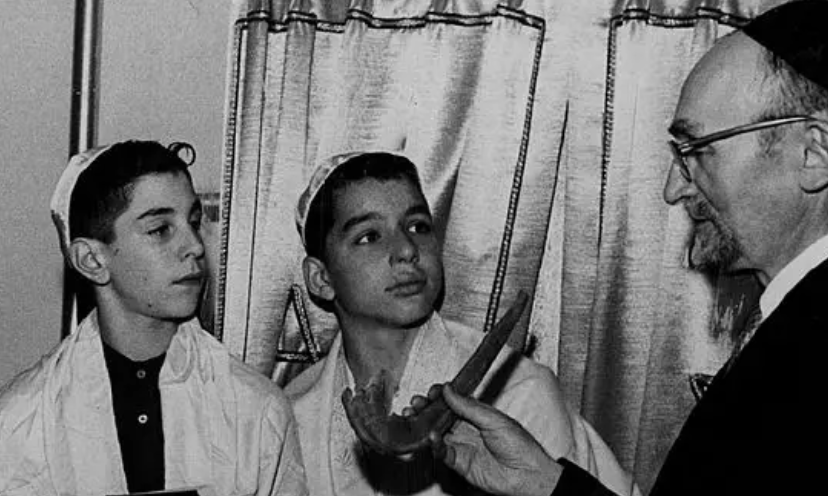
Rabbi Chaim Davidovich was a prominent Orthodox rabbi who served the Jewish community of Buffalo, New York, for eighteen years. He led Congregation Anshe Zedek, was active in Buffalo’s Orthodox Rabbinical Council, and served for seventeen years as Jewish chaplain at Attica State Prison.
His years in Buffalo are also an important chapter in the early history of Chabad-Lubavitch in the city. Rabbi Davidovich corresponded with Rabbi Yosef Yitzchak Schneersohn, the Frierdiker Rebbe, and represented a group of Buffalo Orthodox congregations that included the historic Anshe Lubavitz. Decades later, after moving to Denver, his relationship with Lubavitch continued through correspondence with the Rebbe, Rabbi Menachem M. Schneerson.1
Rabbi in Buffalo
Rabbi Davidovich arrived in Buffalo in 1927 and became one of the established rabbinic figures of the city’s Orthodox community.
He served as the rabbi of Anshe Zedek, while his influence extended beyond his own congregation through his work on the Orthodox Rabbinical Council and his involvement with other Orthodox congregations in the city.
He remained in Buffalo until 1945, when he left for Denver, Colorado.
Correspondence with the Frierdiker Rebbe
Soon after arriving in Buffalo, Rabbi Davidovich entered into direct correspondence with Rabbi Yosef Yitzchak Schneersohn, the Frierdiker Rebbe, then living in Riga.
On 7 Mar-Cheshvan 5689 — October 21, 1928, the Frierdiker Rebbe wrote to Rabbi Davidovich concerning the religious situation in Buffalo, with particular emphasis on Jewish education.
The Frierdiker Rebbe urged him to work toward cooperation within the community while ensuring that matters affecting Torah education — including the teachers, curriculum and schedule of study — remained firmly directed toward a proper Jewish education. He emphasized the importance of finding qualified teachers as the foundation for developing strong students.2
The correspondence continued. Approximately two months later, the Frierdiker Rebbe thanked Rabbi Davidovich for the Mazel Tov he had sent upon the marriage of the future Rebbe, Rabbi Menachem M. Schneerson, and Rebbetzin Chaya Mushka Schneerson, whose wedding had taken place on 14 Kislev 5689.
Rabbi Davidovich and Anshe Lubavitz
Rabbi Davidovich’s communal leadership extended beyond Anshe Zedek.
In Cheshvan 5690 — 1929, he wrote to the prominent Jewish philanthropist Felix M. Warburg, protesting the lack of financial support being provided to Orthodox institutions facing serious financial difficulty.
Rabbi Davidovich wrote on behalf of three Buffalo congregations: Brith Israel, Anshe Lubavitz, and Anshe Zedek. The document places them under an Orthodox organization identified as Agudas Hakodesh, with Rabbi Davidovich serving as its Av Beis Din.3
This provides a direct documentary connection between Rabbi Davidovich and Anshe Lubavitz, Buffalo’s historic Lubavitch congregation on Pratt Street.
Chaplain at Attica State Prison
For seventeen years, Rabbi Davidovich served as Jewish chaplain at Attica State Prison.
One remarkable episode occurred in 1935, when a Torah scroll from Russia was dedicated for use by Jewish prisoners at Attica. The Torah had been confiscated from a Russian synagogue by the Soviet authorities, later recovered by an American Jew traveling in Russia, and eventually acquired by Rabbi Davidovich.
The dedication brought a Torah scroll with a dramatic history into the religious life of Jewish inmates at Attica.4
From Buffalo to Denver
Rabbi Davidovich left Buffalo in 1945 and moved to Denver, Colorado, where he became a leading figure in the Jewish community.
His work there continued his emphasis on Jewish education. During the 1950s and 1960s he served as a Jewish educator at the Jewish National Home for Asthmatic Children, teaching Jewish practice and traditions to the children living there.
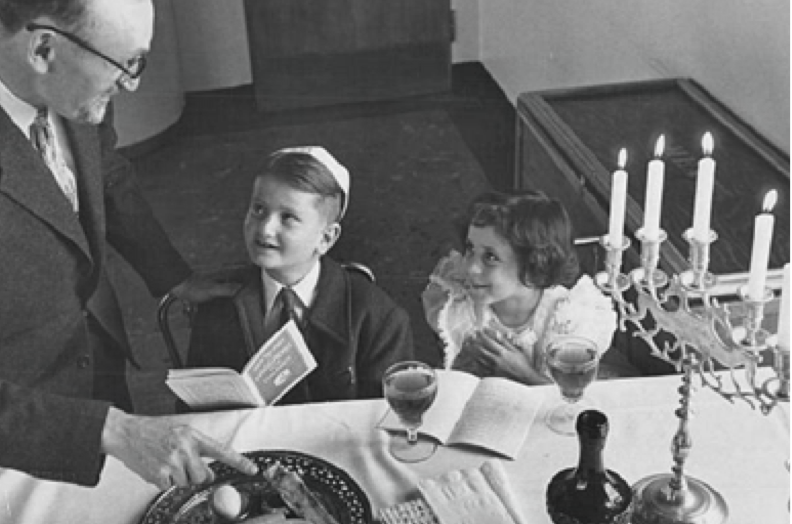
A surviving Denver Post photograph from April 3, 1958 shows Rabbi Davidovich teaching children about Pesach and the Seder.
Yeshiva Toras Chaim
Rabbi Davidovich also played a formative role in the establishment of Yeshivas Toras Chaim in Denver.
His family remembered the creation of a yeshiva in Denver as one of his important accomplishments, and his matzeivah explicitly records:
ויסד בה את ישיבת ״תורת חיים״ — that he founded Yeshivas Toras Chaim there.5
Correspondence with the Rebbe
Rabbi Davidovich’s relationship with Lubavitch continued long after he left Buffalo.
In 1958, the Rebbe, Rabbi Menachem M. Schneerson, wrote directly to Rabbi Davidovich in Denver.
The Rebbe encouraged his support of Torah institutions and addressed the responsibility of American rabbis to bring the members of their communities toward the practical observance of Torah and mitzvos without compromise.6
The correspondence connects two distinct periods of Rabbi Davidovich’s rabbinic life: in Buffalo he corresponded with the Frierdiker Rebbe concerning Jewish education, and decades later in Denver he received guidance from the Rebbe concerning the mission of the American rabbinate.
Jerusalem and His Final Years
After his years in Denver, Rabbi Davidovich settled in Jerusalem in 1969. His wife, Roise, passed away in 1982 and was buried on Har HaZeitim — the Mount of Olives.
Rabbi Davidovich spent the remainder of his life in Jerusalem. He passed away on Shabbos, 1 Menachem Av 5754 — July 9, 1994, at approximately ninety years of age, and was buried on Har HaZeitim alongside his wife.[8]
His matzeivah preserves his full Hebrew name, his father’s name, his rabbinic leadership in Denver, his role in founding Yeshivas Toras Chaim, and the quality by which he was remembered:
פ״נ
איש חשוב ומכובד
הרב ר׳ חיים דוידוביץ
בן הרב ר׳ יוסף יצחק זצ״ל
קבל כל אדם בסבר פנים יפות
רב העיר דנואר-קולורדו
ויסד בה את ישיבת ״תורת חיים״
נלב״ע בשבת קודש א׳ מנחם אב תשנ״ד
תנצב״ה7
Legacy
Rabbi Chaim Davidovich’s rabbinic career spanned Buffalo, Denver and Jerusalem.
In Buffalo, he led Anshe Zedek, served on the Orthodox Rabbinical Council, ministered to Jewish prisoners at Attica, represented Orthodox congregations including Anshe Lubavitz, and maintained a direct correspondence with the Frierdiker Rebbe.
In Denver, he continued his work in rabbinic leadership and Jewish education, helped establish Torah institutions, and remained connected with Lubavitch through his correspondence with the Rebbe.
Perhaps the most personal description of his legacy is the one engraved on his matzeivah:
קבל כל אדם בסבר פנים יפות — he received every person with a pleasant countenance.
Sources and Notes
- The Buffalo News obituary of August 5, 1994 identifies him as the longtime leader of Anshe Zedek, states that he was active in Buffalo’s Rabbinical Council, served as chaplain at Attica State Correctional Facility for seventeen years, and left Buffalo for Denver in 1945.
Buffalo News — Rabbi Chaim Davidovich, August 5, 1994 ↩︎ - Rabbi Yosef Yitzchak Schneersohn, Igros Kodesh Admur HaRayyatz, Vol. 16, pp. 261–262, letter dated 7 Mar-Cheshvan 5689. ↩︎
- Rabbi Chaim Davidovich, handwritten copy of a letter to Felix M. Warburg, Buffalo, Cheshvan 5690.
The surviving document identifies the congregations represented by Rabbi Davidovich as:
ק״ק ברית ישראל (אנשי רוסיא), ק״ק אנשי ליבאוויץ, ק״ק אנשי צדק (אנשי אונגארן)
and continues:
כולם תחת דגל אגודת הקודש ורבי חיים כאב״ד
The document therefore explicitly places Anshe Lubavitz among the Buffalo congregations represented by Rabbi Davidovich and identifies him as Av Beis Din.
View the 1929 Rabbi Chaim Davidovich letter ↩︎ - ↩︎
- Rabbi Davidovich’s great-grandson, Rabbi Aaron Finkelstein, writes of his great-grandfather:
“He started a yeshiva in Denver which exists to this day, Yeshiva Toras Chayim.”
Rabbi Davidovich’s matzeivah independently states:
ויסד בה את ישיבת ״תורת חיים״
Yeshiva Toras Chaim’s own institutional history traces the formal establishment of the present yeshiva to a Denver delegation that approached Beth Medrash Govoha in 1966, followed by the arrival of its founding Roshei Yeshiva in 1967. The precise relationship between Rabbi Davidovich’s earlier efforts and the formal organization of the institution in 1966–67 requires further documentation; the main article therefore preserves the testimony of his family and matzeivah without assigning him a later administrative title.
Yeshiva Toras Chaim — History ↩︎ - Rabbi Menachem M. Schneerson, Igros Kodesh, Letter ו׳תקמט.
The published annotation identifies the recipient explicitly as:
מו״ה חיים: דוידוביץ, דענווער
The letter encourages Rabbi Davidovich in his activities on behalf of Torah institutions and discusses the responsibility of rabbis in America to strengthen practical Torah and mitzvah observance.
Chabad.org — Letter to Rabbi Chaim Davidovich of Denver ↩︎ - Gravestone of Rabbi Chaim Davidovich, Har HaZeitim, Jerusalem.
The inscription identifies him as:
הרב ר׳ חיים דוידוביץ בן הרב ר׳ יוסף יצחק זצ״ל
and records his passing on:
שבת קודש א׳ מנחם אב תשנ״ד
It also describes him as רב העיר דנואר־קולורדו and states ויסד בה את ישיבת ״תורת חיים״.
The Buffalo News obituary of August 5, 1994 states that Rabbi Davidovich had lived in Jerusalem since 1969, that his wife Roise had died in 1982, and that he was buried beside her on the Mount of Olives.
The online Buffalo News transcription gives his death as July 30, 1994, but the gravestone’s date of 1 Menachem Av 5754 establishes the date as July 9, 1994.
Buffalo News — Rabbi Chaim Davidovich, August 5, 1994 ↩︎