Chabad History in Buffalo spans over 130 years, beginning with Anshe Lubavitz – The Lubavitz Synagogue in the 1880s. Today, multiple Chabad institutions serve the Buffalo Jewish community, including Chabad Center For Jewish Life of Buffalo, also known as Chabad Downtown Buffalo, under Rabbi Mendy and Chaya Mushka Labkowski. Throughout its history, Chabad-Lubavitch has been a cornerstone of Jewish education, youth programs, and community outreach, ensuring that Jewish life in Buffalo thrives while remaining rooted in tradition and halachah.
Help us preserve and expand the story of Chabad History in Buffalo. If you have additional information, historical documents, photographs, memories, or corrections, please email history@chabadbuffalo.com or call/WhatsApp 716-545-6806.
Table of Contents
1880s: The Beginnings of Chabad History in Buffalo
The Founding of Anshe Lubavitz – The Lubavitz Synagogue
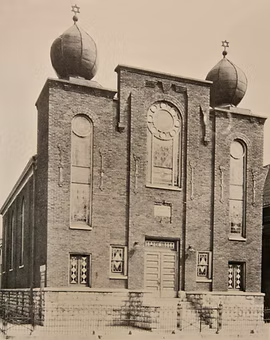
Founded in the 1880s as Anshe Lubavitz and formally incorporated in 1890 as The Lubavitz Synagogue, it became the first organized Chabad-Lubavitch congregation in Buffalo, New York, and one of the earliest Nusach Ari synagogues1 established in the United States. Its establishment placed Buffalo among the earliest centers of organized Chabad-Lubavitch life in America, reflecting the growth of Chabad-Lubavitch communities beyond Eastern Europe.
The congregation initially met in private homes and, as it grew, built a Shul on Pratt Street near William Street. Its original 1890 Certificate of Incorporation named Louis Bernstein, Israel Slater, Peter Rakin, Gusin Dickman and Israel Barkan as its first five trustees.2
In 1911, Anshe Lubavitz erected a large permanent synagogue on Pratt Street on Buffalo’s East Side. The building reportedly cost $30,000 and seated approximately 650 people. The congregation faced difficult financial years after its construction, operating on a budget of only $700 in 1917, but by 1923 it had grown to approximately 140 members and was spending about $5,000 annually. The synagogue became a landmark of Jewish life on the East Side, and Anshe Lubavitz became widely known as the “Pratt Street Shul,” or simply the “Lubavitcher Shul.” It served as a permanent home for Lubavitch prayer, Chassidic traditions and community life for decades.3
Jacob Rosokoff: Twenty-Seven Years of Leadership
One of the central figures in the early development of Anshe Lubavitz was Jacob Rosokoff (1858–1940). Rosokoff came to Buffalo in 1890 and served as president of Anshe Lubavitch for twenty-seven years. Remembered as a deeply religious man who attended services daily, his long presidency made him one of the defining lay leaders of Anshe Lubavitz during its formative decades. He and his wife, Devorah (Dora) Rosokoff, are buried together in Buffalo’s historic Lubavitz Congregation Cemetery, where his gravestone describes him as an “עסקן בצרכי ציבור” — a devoted communal activist and worker for the needs of the community.4
1903: Rabbi Menachem Mendel Leib Gilden
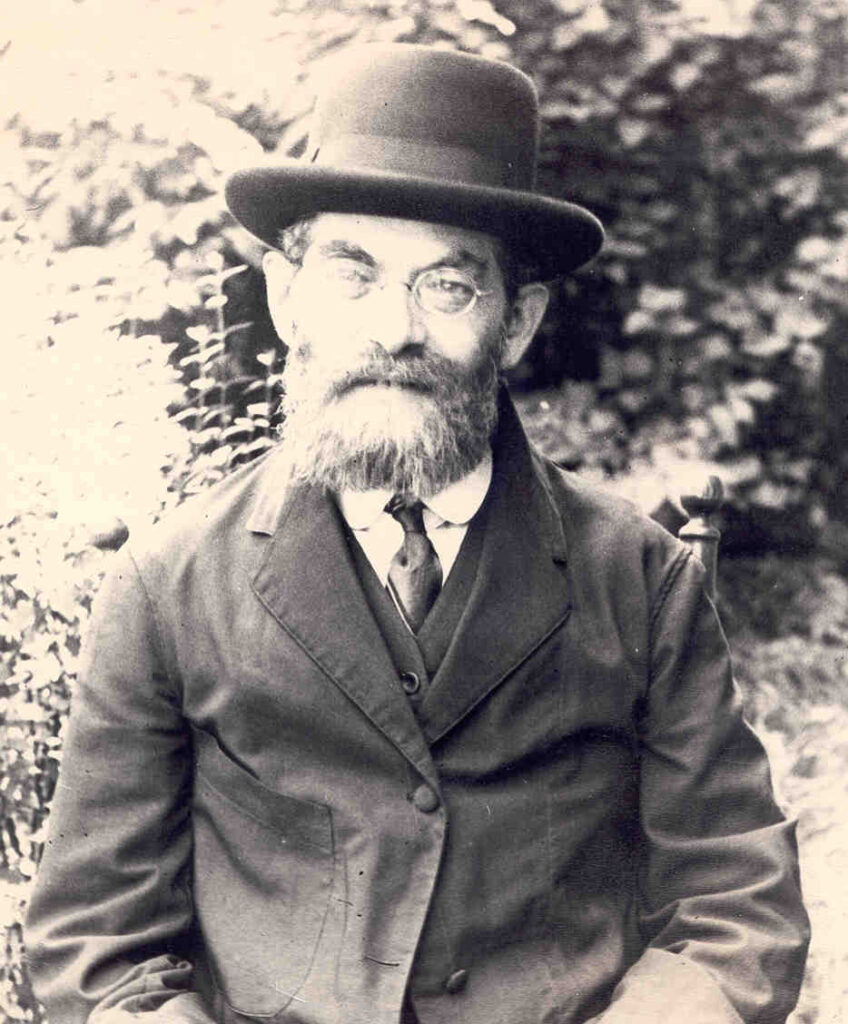
Among the most important early religious leaders of Anshe Lubavitz was Rabbi Menachem Mendel Leib (Mendel Loeb) Gilden, who brought with him a direct connection to the Chassidic world of the Vitebsk region. Born in 1869, Rabbi Gilden left Russia for the United States in August 1903 and subsequently settled in Buffalo, where he became a religious leader of Anshe Lubavitz.5
Rabbi Gilden came from Beshenkovichi, near Vitebsk in present-day Belarus, and was the son of Rabbi Avram Yisroel Gildensohn, one of the Chassidic rabbonim of Beshenkovichi.6
Beshenkovichi had particularly strong ties to Lubavitch. In 1896, while the Gilden family was still rooted there, the town had only five synagogues, two of which belonged specifically to Lubavitch Chassidim. The connection extended beyond the synagogues themselves. In a diary entry from 14 Sivan 5662 — June 19, 1902, the Previous Rebbe described encountering two Chassidic schoolteachers from Beshenkovichi walking home after Shavuos in Lubavitch. It was their thirty-third annual Shavuos journey to Lubavitch, a journey they had made every year since 1871.7
A surviving diary written by Rabbi Gilden during his emigration provides a rare first-person glimpse into his journey from Russia to America. Beginning on 10 Av 5663 — August 3, 1903, he recorded his departure from his family and the difficult voyage westward. Even amid the hardships of the journey, he carefully maintained his religious observance, recording that he davened, made Kiddush, reviewed the weekly Torah portion on Shabbos and took care to verify the kashrus of the food he was served.8
Taken together, Rabbi Gilden’s background adds an important dimension to the early history of Chabad in Buffalo. He did not encounter Lubavitch for the first time after reaching America. He came from a Chassidic rabbinic family in a town with deep and longstanding ties to Lubavitch, and his leadership of Buffalo’s Anshe Lubavitz was rooted in the Chassidic world from which he had come.
Rabbi Gilden passed away on November 10, 1933, and was buried alongside his wife, Baila, in the Lubavitz Congregation Cemetery in Buffalo, the historic cemetery of the congregation he had served. Their adjoining gravestones remain a surviving physical link between Rabbi Gilden and Buffalo’s early Lubavitch community.9
That same year marked a transition in Buffalo’s Orthodox leadership. Rabbi Yehoshua Halevi Zambrowsky arrived from Syracuse in the spring of 1933 to serve as Chief Rabbi of Buffalo’s newly organized Orthodox Jewish Council and became the rav of the Lubavitch Shul on Pratt Street. His arrival preceded Rabbi Gilden’s passing by several months, placing both men in Buffalo during the final months of Rabbi Gilden’s life.10
Cantor Perez Freedman
Cantor Perez Freedman served as the chazzan of Anshe Lubavitz on Pratt Street beginning in 1923. A businessman as well as a cantor, Freedman had received voice and choir training in Europe and became a popular chazzan in downtown Buffalo, retaining a devoted following for many years. He continued officiating at Anshe Lubavitz through the congregation’s later years on Pratt Street.11
Rabbi Chaim Davidovich
Rabbi Chaim Davidovich, was the prominent Orthodox rabbi of Anshe Zedek in Buffalo during this period from his arrival in 1927 until his departure for Denver in 1945, and served as a rav in the city for eighteen years as well as an active member of the Orthodox Rabbinical Council of Buffalo. During his years in Buffalo, he maintained an ongoing correspondence with Rabbi Yosef Yitzchak Schneersohn, the Previous Rebbe and sixth Rebbe of Chabad-Lubavitch.
In a letter dated 7 Mar-Cheshvan 5689 (October 21, 1928), written from Riga, the Previous Rebbe responded to Rabbi Davidovich concerning the religious situation in Buffalo. The Rebbe expressed his deep concern for Jewish education and offered practical guidance concerning cooperation within the community, qualified teachers, the curriculum, and the schedule of Torah study.12
The correspondence continued. In a follow-up letter approximately two months later, the Previous Rebbe thanked Rabbi Davidovich for the Mazel Tov he had sent upon the marriage of the future Rebbe, Rabbi Menachem M. Schneerson, and Rebbetzin Chaya Mushka Schneerson, which had taken place on 14 Kislev 5689.
This correspondence demonstrates that Buffalo maintained a direct connection with the international leadership of Chabad-Lubavitch decades before the Previous Rebbe arrived in the United States in 1940, underscoring the city’s important place in the early history of Chabad-Lubavitch in America.
1933–1939: Rabbi Yehoshua Halevi Zambrowsky
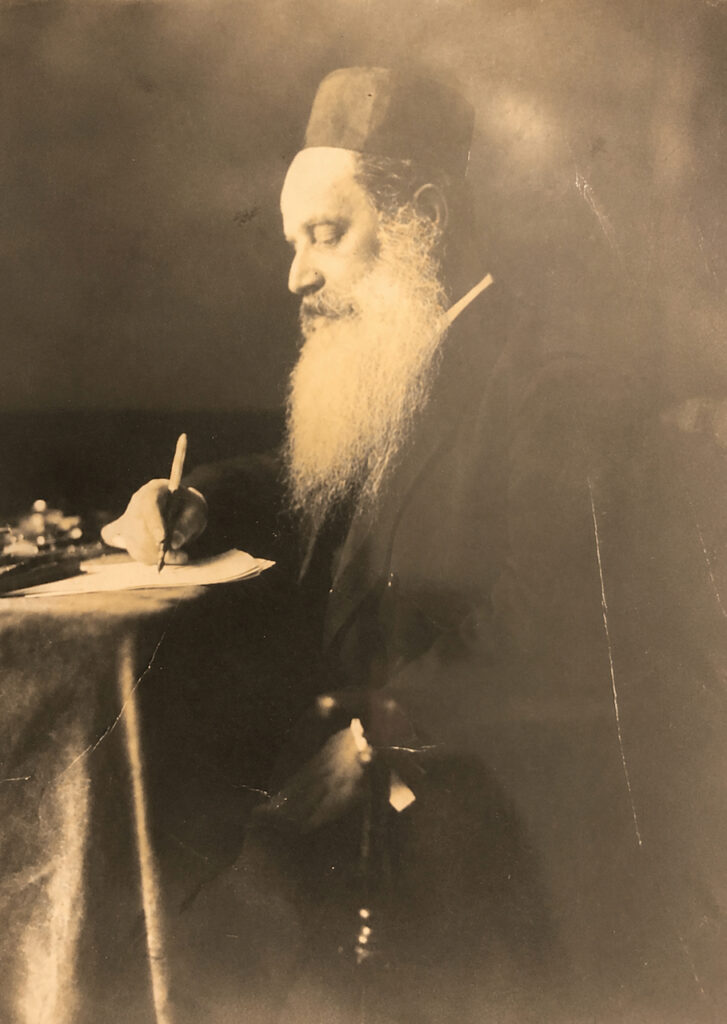
In 1933, Rabbi Yehoshua Halevi Zambrowsky came to Buffalo from Syracuse and became the Rabbi of Anshe Lubavitz at 113 Pratt Street, the historic congregation known as the Lubavitch Shul or Pratt Street Shul. Rabbi Zambrowsky was a distinguished Torah scholar and communal rabbi whose arrival brought one of Buffalo’s leading Orthodox rabbinic figures to the pulpit of Anshe Lubavitz.13
Rabbi Zambrowsky’s leadership extended far beyond Anshe Lubavitz. Upon his arrival in Buffalo, he assumed leadership of the city’s Orthodox Jewish community as Chief Rabbi of the Buffalo Council of Jewish Congregations, an organization encompassing nine synagogues and three temples. His arrival followed the passing in 1932 of Rabbi Avraham Meir Franklin, one of Buffalo’s leading Orthodox rabbinic authorities, who had been recognized as the city’s Chief Rabbi and Av Beis Din. Rabbi Zambrowsky became the next major Orthodox rabbinic figure in Buffalo to bear the title of Chief Rabbi.14
Rabbi Zambrowsky also played an important role in kashrus throughout Buffalo. He supervised kosher slaughter at the Jacob Dold Packing Company and was subsequently appointed to the New York State Department of Agriculture and Markets to assist in enforcing the state’s kosher food laws. He also served on the executive board of the Union of Orthodox Rabbis of the United States and was active in the national Mizrachi movement.15
Rabbi Zambrowsky remained in Buffalo until his passing on 11 Elul 5699 — August 26, 1939. He was buried in the Lubavitz Congregation Cemetery in Cheektowaga. His gravestone identifies him as Av Beis Din of Buffalo, formerly of Warsaw, and as the author of Chemdat Yehoshua.16
1942: Rabbi Dov Ber (Berish) Zuckerman
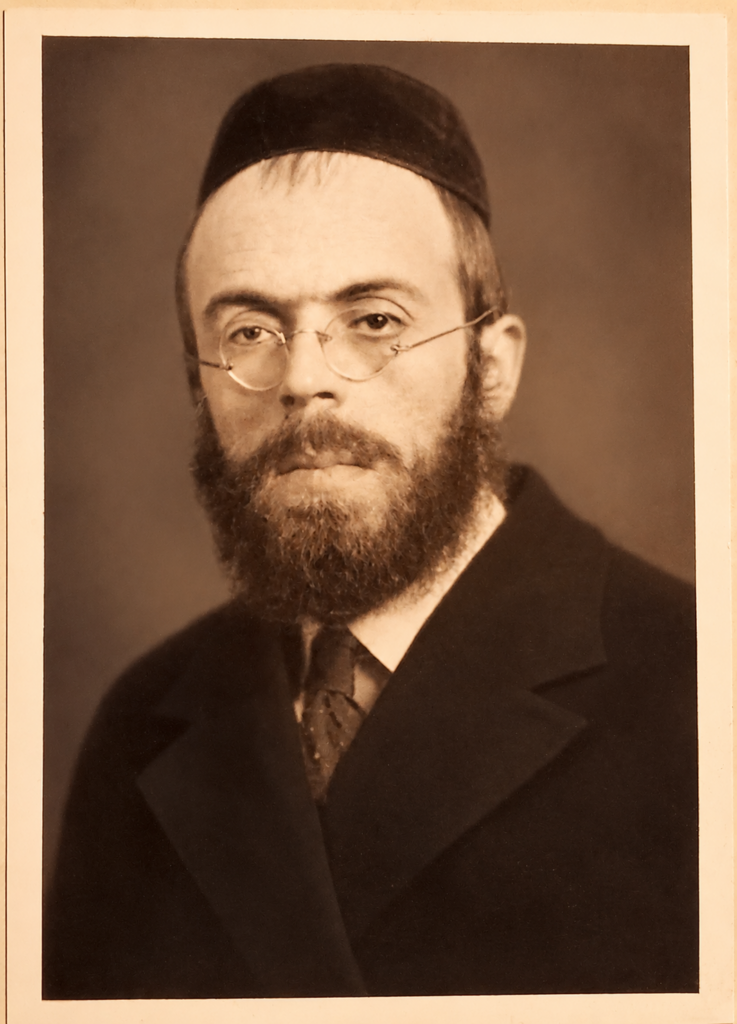
In 1942, Rabbi Dov Ber (Berish) Zuckerman was appointed the rabbi of Anshe Lubavitz in Buffalo and was recognized as Buffalo’s Chief Rabbi, a position he held for approximately twenty-five years.17
Born in 1901 in Galicia, Rabbi Zuckerman was a renowned Torah scholar and Belzer Chassid who came to the United States in 1939 after escaping Nazi-controlled Europe.
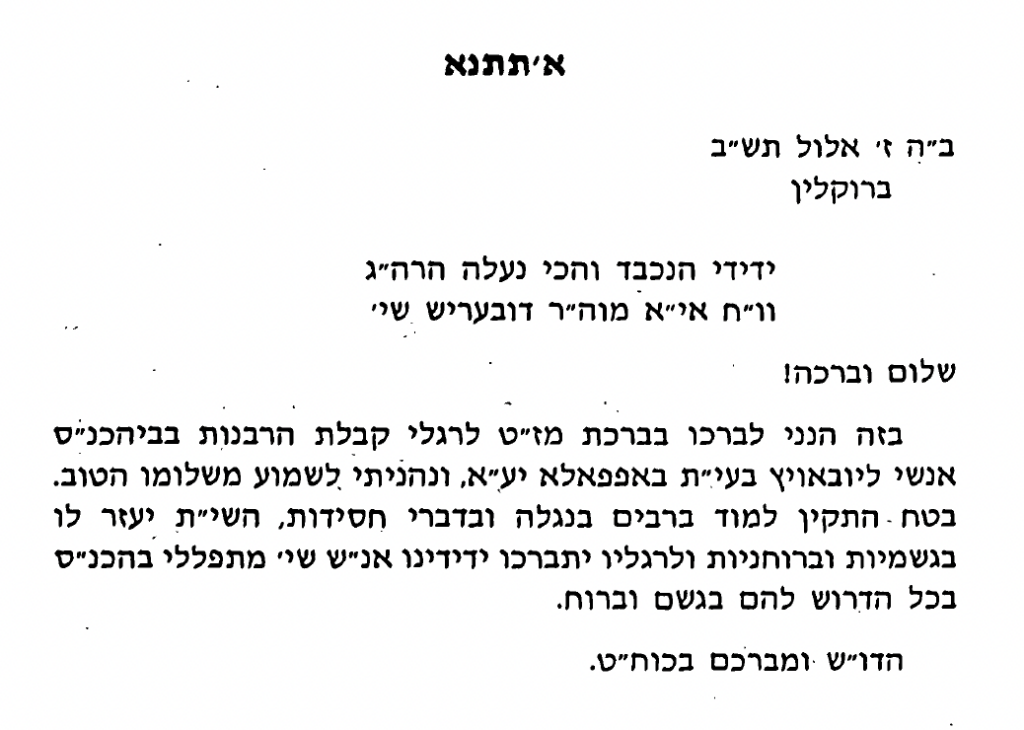
His appointment at Anshe Lubavitz is documented in a letter dated 7 Elul 5702 (August 20, 1942) from the Previous Lubavitcher Rebbe, Rabbi Yosef Yitzchak Schneersohn, congratulating him on accepting the rabbinate18.
The Previous Rebbe encouraged Rabbi Zuckerman to establish public Torah study in both Nigleh and Chassidus and blessed him and the members of the congregation in all their material and spiritual needs.
During his years in Buffalo, Rabbi Zuckerman became one of the region’s leading halachic authorities. Jews from Buffalo and surrounding communities sought his guidance on difficult matters of Jewish law, including gittin, and he also provided rabbinic supervision for shechita in the city.19
He maintained a close Torah connection with Lubavitch and corresponded with the Rebbe on Torah matters during his years in Buffalo.
In the mid-1940s, Rabbi Zuckerman left Anshe Lubavitch and became the Rav of Brith Sholem at 171 Pine Street, just around the corner from Anshe Lubavitch. He would go on to lead Brith Sholem for approximately the next quarter century.
In 1951, Brith Sholem relocated to 1052 Hertel Avenue. Two surviving letters written by Rabbi Zuckerman on his personal letterhead list addresses at 1 Traymore Avenue and 5 Lovering Avenue, both only a short distance from the congregation’s new Hertel Avenue location.
In 1953, Rabbi Zuckerman, together with Rabbi Justin Hofmann and Rabbi Samuel and Miriam Stern, assisted Buffalo Shlucha, Rebbetzin Devorah Groner in the effort to establish the Kenmore Mikvah, a project she spearheaded. The property at 1248 Kenmore Avenue was purchased in 1956, and the mikvah officially opened in 1957.
Rabbi Zuckerman remained in Buffalo until 1968, when he moved to Boro Park, Brooklyn. He passed away on 18 Adar I 5733 (1973). With the Rebbe’s encouragement, his Torah writings were subsequently published in Beis Aharon. Rabbi Zuckerman is buried in Beth David Cemetery in Elmont, New York.
The Merger of Anshe Lubavitz and Ahavas Achim
In 1949, Anshe Lubavitch sold its building at 113 Pratt Street for $30,000.20 Two years later, in 1951, the newly merged congregation Ahavas Achim–Lubavitch built a new synagogue at 345 Tacoma Avenue, with seating for approximately 900 people.
The merger appears to have brought significant changes to the synagogue. By Elul 5711 (September 1951), there was already discussion within Ahavas Achim–Lubavitch of removing the mechitzah and allowing men and women to sit together during services. The matter was serious enough that the Rebbe sent multiple letters to members and leaders of the Buffalo Jewish community, urging them to oppose the proposed change and preserve the synagogue’s traditional standards.
On 4 Elul 5711 (September 5, 1951), the Rebbe wrote directly to Reb Leib Silverstein, who had served as president of the congregation. The Rebbe expressed his shock that such a proposal could even be considered in a synagogue bearing the name Lubavitch. More significantly, the Rebbe criticized Silverstein for having resigned from the presidency rather than remaining at his post and “standing in the breach.” The Rebbe wrote that leaving his position was not the proper course; rather, he should have remained at his post and fought against those seeking to break with the synagogue’s traditional standards. The Rebbe urged him to use every possible effort to have the proposal withdrawn and asked to be informed of his success.
That same day, the Rebbe addressed a separate English letter to the president and officers of Congregation Ahavas Achim Lubavitch. He wrote that he was “deeply disturbed” to hear that individuals in the congregation wished to introduce a new arrangement permitting men and women to worship together without a partition. The Rebbe emphasized that a synagogue carrying the name Lubavitch bore a particular responsibility to preserve traditional Jewish practice, describing a Lubavitch synagogue without a mechitzah as “completely unthinkable.”
The Rebbe appealed both to the longstanding tradition of separate seating in Jewish synagogues and to the legacy of the Lubavitcher Rebbeim, who had sacrificed greatly to preserve Jewish tradition. He called upon every member of the congregation—and particularly its officers and trustees—to use their influence to reject any attempt to remove the mechitzah. In a postscript, the Rebbe noted that he had sent similar letters to several leading members of the congregation, but stressed that each individual bore personal responsibility, “as though he were alone,” to ensure that the synagogue remained worthy of the name Lubavitch.
1943: Yeshivas Achei Tmimim Lubavitz is Established in Buffalo
In 1943 (5703 / תש”ג), a new chapter in the history of Chabad in Buffalo began with the establishment of Yeshivas Achei Tmimim Lubavitch, part of the growing network of Jewish day schools established under the direction of Rabbi Yosef Yitzchok Schneersohn, the Previous Rebbe and sixth Rebbe of Chabad-Lubavitch.
After arriving in the United States in 1940, the Previous Rebbe launched an ambitious effort to strengthen Torah education across America. Beginning with Mesibos Shabbos gatherings and supplementary Jewish education, the initiative soon developed into a network of full-time Jewish day schools known as Achei Tmimim.
To establish the new school, the Previous Rebbe sent Rabbi Avraham Dov Hecht, then principal of Yeshivas Achei Tmimim in Newark NJ, to Buffalo. Rabbi Hecht met with local rabbis and community leaders, organized support for the project, and laid the groundwork for a permanent Torah day school.
Rabbi Yehuda Tzvi (Hershel) Fogelman: First Principal of Yeshivas Achei Tmimim in Buffalo
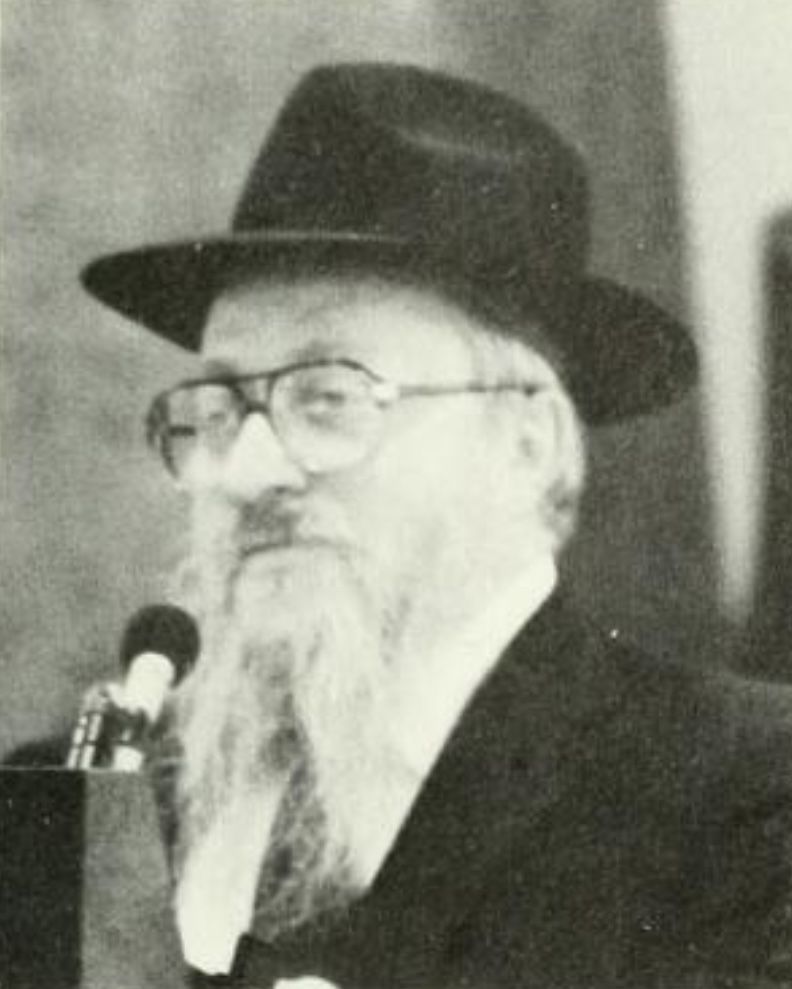
Rabbi Yehuda Tzvi (Hershel) Fogelman was chosen by the Previous Rebbe to be the first principal and Rosh Yeshiva of Yeshivas Achei Tmimim in Buffalo and assumed responsibility for developing the newly established school.
Before leaving for Buffalo at the end of Av 5703 (1943), Rabbi Fogelman had a private audience, or yechidus, with the Previous Rebbe, who blessed him with success in his work in Buffalo. The Rebbe instructed him that, in addition to his responsibilities at the yeshiva, he should also speak in Buffalo’s synagogues, while being careful not to interfere with the positions of the city’s existing rabbis. The Rebbe explained that he was being sent “to add and not to detract.”
Rabbi Fogelman then told the Previous Rebbe that whenever he traveled away from New York, “פיל איך זיך עלענט” — “I feel alone.” The Rebbe immediately replied in Yiddish: “דו ביסט נישט עלענט, וואו דו טוסט פאר הרבצת תורה בין איך מיט דיר” — “You are not alone. Wherever you work for the strengthening of Torah, I am with you.” Rabbi Fogelman later wrote these words on a small piece of paper and kept them in his wallet for the rest of his life. Looking back on those years, he simply concluded: “In reality, the work in Buffalo was a great success.”21
The beginning was challenging. Enrollment was small, and establishing a traditional Torah day school in Buffalo required recruiting students, securing financial support, developing a faculty, and convincing Jewish parents of the importance of a full Jewish education.
The Rosh Yeshiva was the distinguished Buffalo Rabbi, Rabbi Michael Lifshitz, Ph.D.22
The officers of the yeshiva were: Meir Garin — founder and treasurer; R. Y. Manash — president; S. Segal and A. Labran — vice presidents; H. Greenberg — financial secretary; Y. Reiman — recording secretary, and a committee of prominent rabbis and Torah scholars.
The yeshiva opened with just five students, but quickly grew to 23 students in three classes.
The Previous Rebbe remained personally involved in the yeshiva’s development, corresponding with Rabbi Fogelman, guiding his work in Buffalo, and encouraging him to persevere despite the difficulties.
Rabbi Fogelman’s responsibilities extended beyond the Yeshiva. He worked throughout Buffalo to recruit students, visited Jewish families, encouraged parents to provide their children with a Torah education, and sought to strengthen Jewish observance among the city’s youth. He also established a weekly program for children attending Buffalo’s public schools, bringing them to the yeshiva every Monday for an hour of Jewish learning, giving children who did not attend a Jewish day school an opportunity to receive a Jewish education.
The Previous Rebbe instructed that the students be educated not only in Torah knowledge, but also in good character, respect for parents, proper conduct, and Yiras Shamayim. At the same time, Rabbi Fogelman was encouraged to expand enrollment and develop additional educational activities throughout Buffalo.
The work also included Mesibos Shabbos, bringing Jewish children together for Shabbos gatherings, Torah study, and activities.
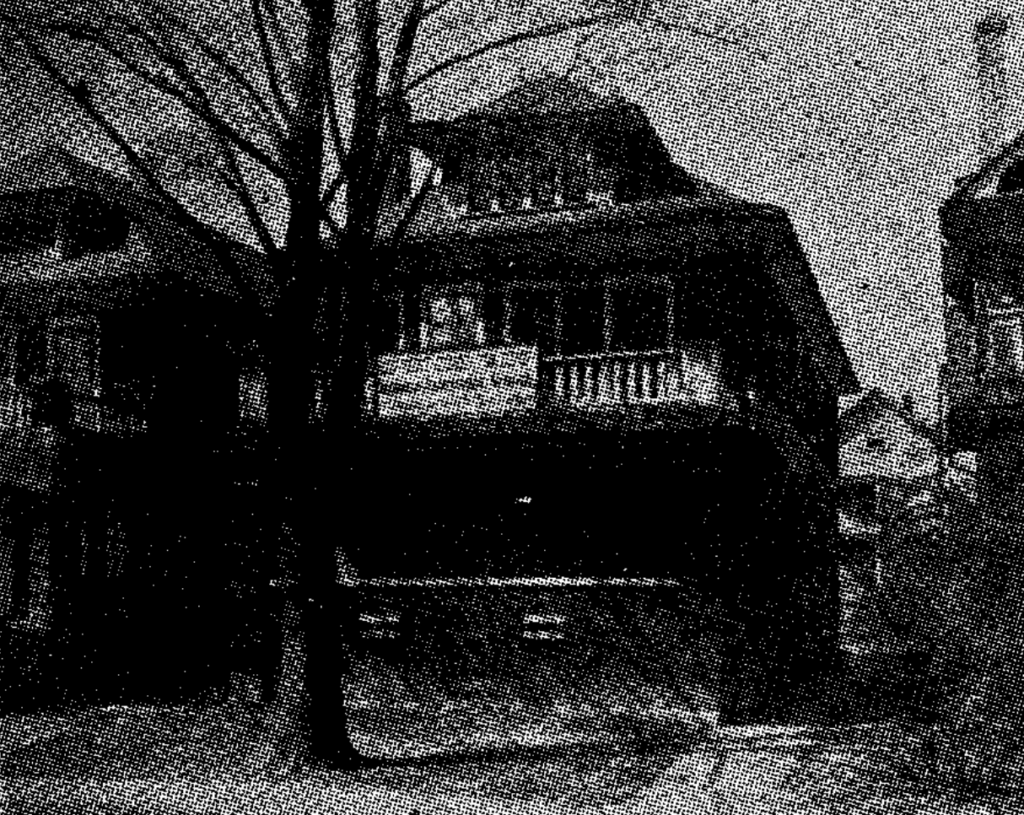
A location for the Yeshiva: 42 Butler Avenue
Despite starting the school in the summer of 1943, just a few months later, a major step in the development of the yeshiva was securing a permanent building at 42 Butler Avenue in Buffalo.
The funds for the building were donated by Mrs. Rose Greenberg, providing the young institution with a permanent home from which it could continue to grow and expand.
The Yeshiva was publicized by means of a proclamation:
ישיבה אחי תמימים ליובאוויטש
42 BUTLER AVE.
Premises for Yeshivah Donated by
MRS. ROSE GREENBERGGood news for Buffalo Jews!
The first time in our history, our city has been blessed with a Yeshiva, a branch of the widely branched Lubavitcher Yeshivos. The Yeshiva gives you the possibility to give every child a true Jewish education in Torah and Yiddishkeit — free of charge.
The program consists of Tanach, Rashi, Mishnayos, Gemara, history, reading and writing Yiddish and Hebrew. Much attention is given to developing the good character and good traits of the students.
Jews, save your children from lack of Jewish knowledge and bad behavior, and send them to the Yeshiva.
Registration: Daily from 3:30 until 8:00; Sunday from 10:00 until 2:00.
Signed: The Administration
With its own building, Yeshivas Tomchai Tmimim was able to develop from a small beginning into an established educational institution. Additional students enrolled, classes were expanded, and new teachers joined the faculty.
The school at 42 Butler Avenue became a center for the effort to provide Buffalo’s Jewish children with a traditional Torah education and to strengthen Jewish life in the city.
A successful aspect of the yeshiva was its own special minyan, established for the students to daven (pray) together on Shabbos and Yomim Tovim (holidays) in the yeshiva building. The students themselves led the davening at the amud (podium). Over time, the yeshiva also began holding a special Shalosh Seudos for the students.
1944: Beis Rivkah School for Girls
In 1944 (5705 / תש”ה), Chabad’s educational work in Buffalo expanded with the establishment of a Beis Rivkah School for girls, extending the Previous Rebbe’s vision for Torah education to the city’s Jewish girls. The first day of classes was the 6th of Chesvan.
The establishment of Beis Rivkah marked another important step in the development of Chabad education in Buffalo. Together with Yeshivas Achei Tmimim for boys and the growing Mesibos Shabbos activities, it broadened the effort to provide Buffalo’s Jewish children with a strong Torah education and connection to Jewish life.
Rabbi Tzvi Fogelman appointed Rabbi at Ahavas Achim
Mid 1944, Rabbi Tzvi Fogelman was appointed as Rabbi and leader ‘Rav U’Manhig’ of the Synagogue Ahavas Achim of Buffalo, N.Y. at 833 Fillmore Ave.23
Editorial Note: At this point, it appears that Buffalo had three separate Chabad-Labavitch associated Shabbos minyanim operating simultaneously: Rabbi Berish Zuckerman at Anshe Lubavitch, Rabbi Hershel Fogelman at Ahavas Achim, and the Yeshiva Achei Tmimim student minyan at 42 Butler Ave.
1945: A Second Location
5 Lovering Avenue
For the 1945–1956 school year, due to an influx of students in the Yeshiva, an additional location was purchased at 5 Lovering Avenue, extending access to a Chabad-Lubavitch education to children living in other sections of the city.
The property was purchased under the corporation Yeshivos Tomchai Tmimim Lubavitz Inc, a corporation setup in Brooklyn by Chabad-Lubavitch headquarters to promote, aid and assist in the creation and organization of Chabad-Lubavitch schools in the United States. The directors of the corporation included Rabbi Yosef Yitzchok Schneersohn, the Previous Rebbe and sixth Rebbe of Chabad-Lubavitch, as well as his son in law Rabbi Shemaryahu Gurary (also known by his Hebrew initials as Rashag), the director of Tomchei Temimim yeshiva network which was founded in the city of Lubavitch in 1897, and continued in the USA.
The Yeshiva also established a Beis Midrash division for older students, with Rabbi Leib Silverstein appointed as its instructor, further expanding the institution beyond its younger grades.
The property was ultimately sold two years later in 1948 for $8000 as the Yeshivas main location at 42 Butler Ave was sufficient, and this second property was surplus age and a continuing expensive.24
Rabbi Dovid Edelman Arrives in Buffalo
In 1945, the Frierdiker Rebbe sent Rabbi Dovid HaLevi Edelman to Buffalo to join the developing Yeshivas Achei Tmimim. Before coming to Buffalo, Rabbi Edelman had helped establish a Chabad educational institution in Bridgeport, Connecticut, and later taught in Pittsburgh.
Rabbi Edelman joined the yeshiva during the latter part of Rabbi Hershel Fogelman’s leadership and remained in Buffalo for approximately three years. Following Rabbi Fogelman’s departure the following summer, Rabbi Edelman succeeded him in directing the yeshiva and remained at its head until 1948.25
1946: Rabbi Dovid Edelman Succeeds Rabbi Fogelman
Rabbi Hershel Fogelman continued leading and developing Chabad’s educational work in Buffalo until the summer of 1946 (5706 / תש״ו), when he left Buffalo to assume leadership of Yeshivas Achei Tmimim in Worcester, Massachusetts.
Following his departure, Rabbi Dovid Edelman succeeded him as director of Yeshivas Achei Tmimim in Buffalo. Rabbi Aharon Popack worked alongside him in the leadership and educational work of the school, while additional young Chabad educators joined the growing faculty.
Rabbi Aharon and Chana Popack
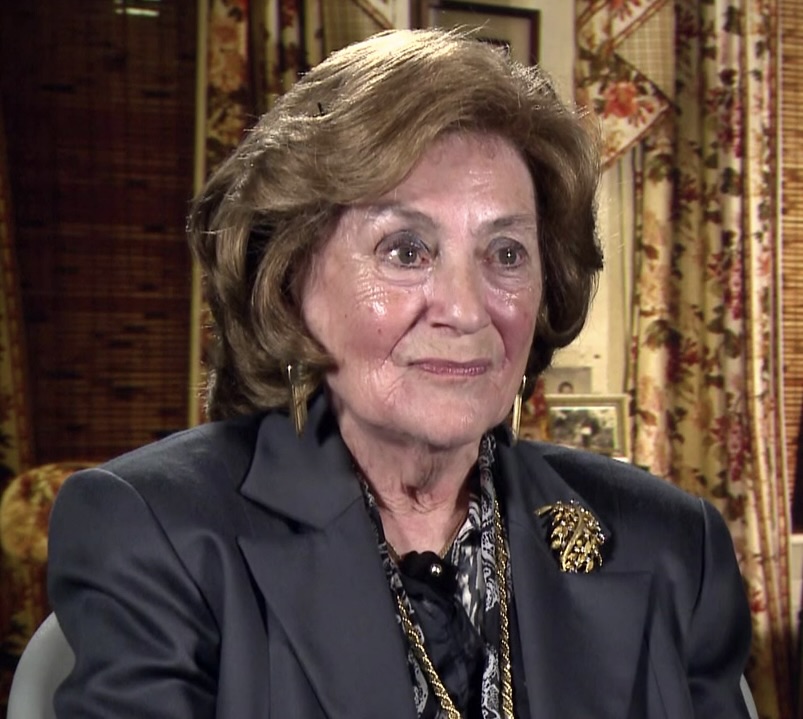
That same year, in 1946 (5706 / תש”ו), the Previous Rebbe sent Chana Teleshevsky, later Mrs. Chana Popack, to Buffalo, where she joined the work of Beis Rivkah, the Chabad school for girls that had been established two years earlier.
In Buffalo she met Rabbi Aharon Popack, who was working in Yeshivas Achei Tmimim. Rabbi Aharon and Chana subsequently married, with the Frierdiker Rebbe serving as mesader kiddushin at their wedding.
Following their marriage, Rabbi Aharon and Mrs. Chana Popack continued their work in Buffalo providing Jewish education — Rabbi Aharon with Achei Tmimim and Mrs. Popack with Beis Rivkah.26
Rabbi Shimon Goldman
During this same period, Rabbi Shimon Goldman was sent to Buffalo to join the faculty of Yeshivas Achei Tmimim at 42 Butler Avenue. Upon his arrival, Rabbi Aharon Popack assigned him a class of children to teach.
Rabbi Goldman devoted himself intensely to his students and the Yeshiva, and to the mission of establishing lasting Torah education in Buffalo. He approached his work according to the teaching of the Sages, “Words that come from the heart enter the heart,” seeking to instill within his students an enduring love of Torah and mitzvos.
He also became closely connected with Buffalo’s Orthodox Jewish community and studied shechita during his years in the city, spending considerable time with the local shochtim and Rabbi Dov Berish Zuckerman.
Rabbi Goldman recalled in his book, From Shedlitz to Safety, that the task was not an easy one. Although Buffalo had a large and established Jewish community, there was considerable skepticism that traditional Torah education could take root and flourish in the city. He writes that many local Jewish residents watched the developing yeshiva with disbelief, convinced that it would eventually close. Time and again, they told the young Chassidim:
“There’s no future for the Torah way in Buffalo. It simply won’t work. – They were proven wrong.“
In 1949, following his marriage to Esther Gordon, Rabbi Goldman settled in Philadelphia and later moved to Brooklyn, bringing his years of educational work in Buffalo to a close.27
Rabbi Shmuel Lazar
Beginning in 5708 (1947–1948), Rabbi Shmuel Lazar joined the broader effort to strengthen Chabad education in Buffalo. He was among the young Chassidim sent by the Frierdiker Rebbe to establish and support Chabad schools in communities across the United States.
His assignments during this period included Buffalo, Rochester, New Haven, and Worcester, placing his work in Buffalo during the latter part of Rabbi Edelman’s leadership of Yeshivas Achei Tmimim.28
Yeshivas Tomchei Tmimim continued to grow steadily. Its classes expanded, additional students enrolled, and the school began bringing significant religious change to Jewish life in Buffalo.
The yeshiva’s success was strengthened by dedicated members of the local Jewish community who believed in its mission. Reb Leibish Silberstein, the honorary president of the school, worked tirelessly to raise funds for its activities. He was assisted by two local shochtim, Mr. Landau and Mr. Siggel, together with another individual who served as the school’s secretary.
Together, the yeshiva’s leadership, teachers, and local supporters helped transform what many had considered an impossible undertaking into an established center of Torah education in Buffalo.
1948: Rabbi Yitzchok Dovid and Devorah Groner
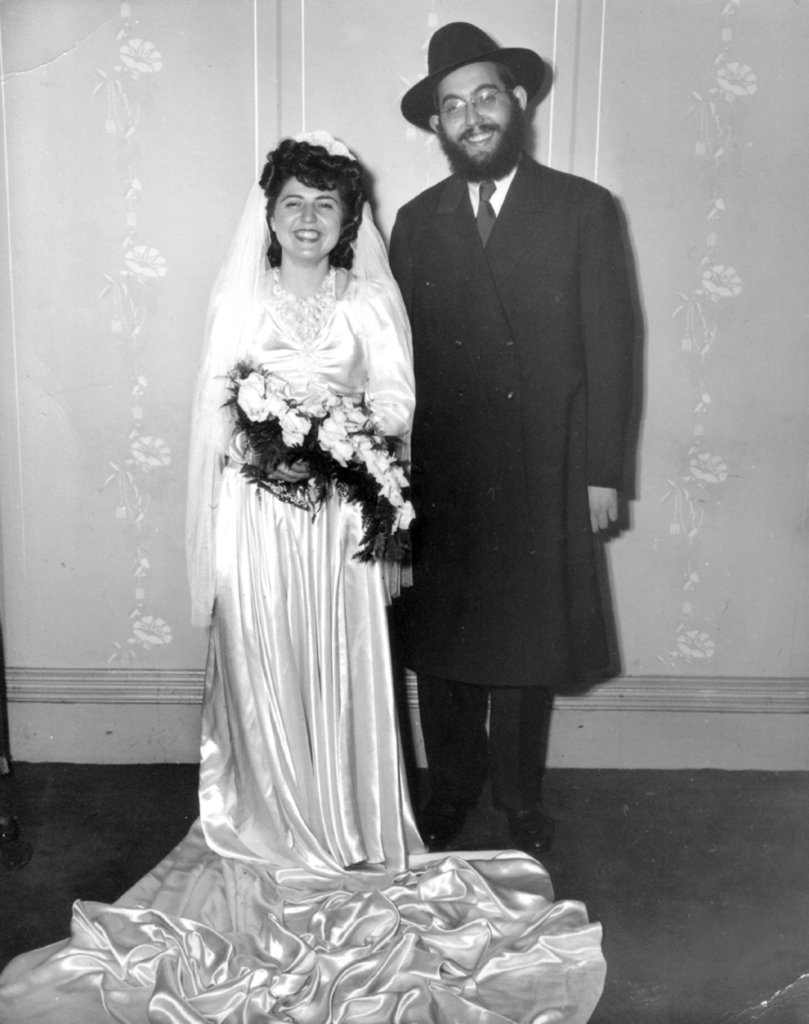
In 1948 (5708 / תש״ח), Rabbi Edelman’s three years in Buffalo came to an end when he married and was sent by the Frierdiker Rebbe to Boston.
That same year, the Frierdiker Rebbe sent Rabbi Yitzchok Dovid Groner and his wife, Devorah Groner, to Buffalo. Rabbi Groner succeeded Rabbi Edelman as director of Yeshivas Achei Tmimim, while Rabbi and Mrs. Groner also became deeply involved in the wider Jewish community.
Their arrival opened the next major period in the history of Chabad education in Buffalo. The Groners would remain in the city for approximately eight years, continuing the work of the yeshiva and expanding Chabad’s educational and communal activities throughout Buffalo and Western New York.29
Under their leadership, the yeshiva and its community programs flourished. In addition to providing structured Torah education for children, they expanded learning opportunities for adults through regular classes, lectures, and community gatherings that inspired greater Jewish observance and participation.
One of Devorah Groner’s proudest achievements in Buffalo was the establishment of the women’s mikvah on Kenmore Avenue, a project she spearheaded and helped organize, fundraise for, and manage. Her efforts strengthened the city’s religious infrastructure and provided an essential resource for Jewish family life.30
In the early 1950’s, the Rebbe asked Rabbi Groner to perform a certain task. Sensing Rabbi Groner’s feeling of difficulty in accomplishing the task, the Rebbe related: each morning, either before or after Birchos Hashachar, anyone who had merited to see the Frierdiker Rebbe should go to a corner and envision his holy countenance. After doing so, the Rebbe said, his work would be accomplished on an entirely new level.31
Together, Rabbi and Mrs. Groner became deeply involved in the spiritual development of Buffalo’s Jewish community, helping inspire a new generation of committed Jewish families and mentoring young men who would later assume rabbinic and communal leadership positions throughout North America. Their years of Shlichus in Buffalo continued until 1956 (5716 / תשי”ו), when they departed the city after about eight years in Buffalo, bringing this chapter of their pioneering work in Western New York to a close.
1955: 85 Saranac Avenue
In 1955, the property at 85 Saranac Avenue was purchased.
The property was acquired under a newly formed religious corporation, Yeshiva Achei Tmimim of Buffalo, incorporated on January 31, 1955. Its directors were Rabbi Leib (Louis) Silverstein, Rabbi Ben Kape, and Rabbi Shimon (Sam) Goldman.32
Rabbi Hershel Slansky: Principal of Yeshivas Achei Tmimim
Rabbi Hershel Slansky, one of the early American students of Tomchei Tmimim, was sent by the Rebbe with his wife Debby to Buffalo following their marriage in 1954. He initially worked in Yeshivas Achei Tmimim alongside its existing leadership. After Rabbi Yitzchok Dovid and Devorah Groner left Buffalo in 1956, Rabbi Slansky assumed the position of menahel (principal) for the 1957 school year, continuing in that role until 1959.
Rabbi Slansky later recalled: “After my marriage in 1954, the Rebbe sent me to make a yeshivah in Buffalo, where we lived until 1959.”33
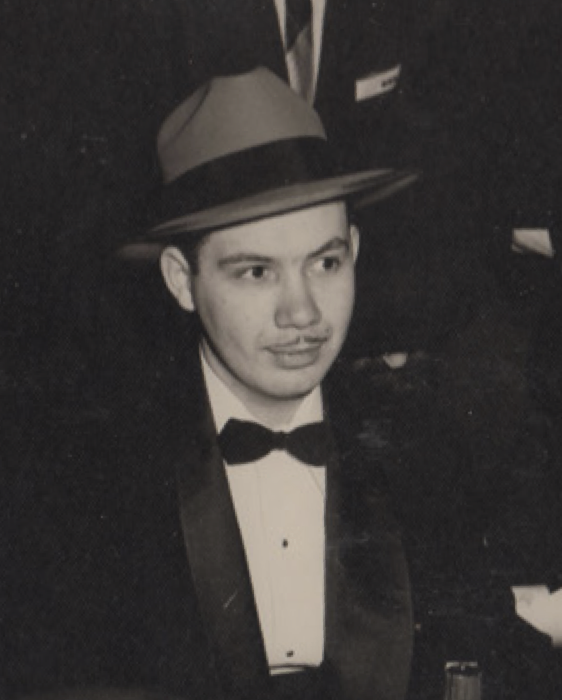
Describing his Shlichus, Rabbi Slansky recalled:During his years in Buffalo, Rabbi Slansky worked tirelessly to strengthen the institution and secure its financial stability. The yeshiva faced significant financial challenges, and Rabbi Slansky regularly shared his concerns about its situation with the Rebbe.
The Rebbe emphasized that support for the yeshiva needed to be directed specifically toward the educational institution itself. After reviewing the yeshiva’s needs, Merkos L’Inyonei Chinuch sent financial assistance, including a donation of $1,000—a substantial amount at the time.
On Yom Kippur, Rabbi Slansky shared the story with the community. Holding up the check, he declared that there was “a rabbi in Brooklyn who worries about your children.” His words inspired renewed communal support for the yeshiva and demonstrated the Rebbe’s personal concern for the future of Jewish education in Buffalo.
Rabbi Slansky and his family remained in Buffalo until 1959 (5719 / תשי”ט). It appears that around the time of his departure, the Yeshiva would not reopen for the following school year.
Despite this, it did not mark the end of the Rebbe’s concern for Jewish education in Buffalo. As the following chapter would demonstrate, the Rebbe soon sought to revitalize Chabad’s work in the city and rebuild the yeshiva, opening a new chapter in Buffalo’s Chabad history.
1960: A New Chapter for Chabad in Buffalo
Rabbi Mordechai (Mottel) Zajac
In 1960 (5720 / תש”כ), Rabbi Mordechai (Mottel) Zajac, then living in Brazil, traveled to New York to receive the Rebbe’s blessing before embarking on a new business venture. Instead, his visit took an unexpected turn: the Rebbe requested of him to instead move to Buffalo, entrusting him with strengthening Chabad’s work in the city.
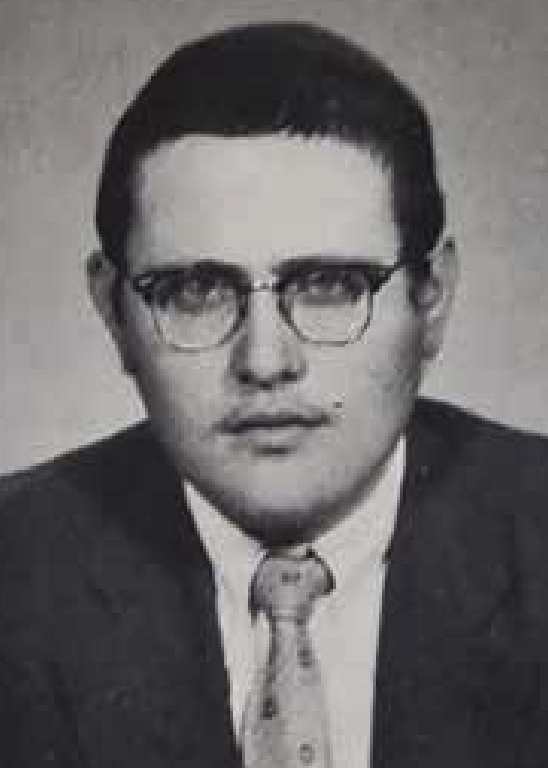
A central part of Rabbi Zajac’s mission was rebuilding Yeshivas Achei Tmimim, which had closed the previous year. Expressing the urgency of restoring the institution established by the Previous Rebbe, the Rebbe remarked in essence: “How can one sleep peacefully when my father-in-law’s yeshiva is closed?”.
Rabbi Zajac accepted the mission and moved to Buffalo, where he served for more than three years as Dean and Executive Director of Yeshivas Achei Tmimim, working to restore its educational programs and strengthen the institution.
His work also reached beyond the yeshiva, including outreach to the growing number of Jewish students at Buffalo’s universities. Rabbi Dovid Schochet, a Chabad Rov and Shliach in neighboring Toronto, Canada, later recalled that Rabbi Zajac invited him to Buffalo to address local Jewish university students—an early example of the student outreach that would become an important part of Chabad’s work in Buffalo in the years that followed.34
The Rebbe remained closely interested in the progress of the yeshiva and later expressed his satisfaction that the institution was once again growing both physically and spiritually, underscoring the importance he placed on strengthening Jewish education in Buffalo.
In 1964 (5724 / תשכ”ד), after approximately three and a half years of dedicated work in Buffalo, Rabbi Zajac left Buffalo and returned to Brazil.
1971: The Modern Chabad on Campus
Rabbi Noson and Miriam Gurary
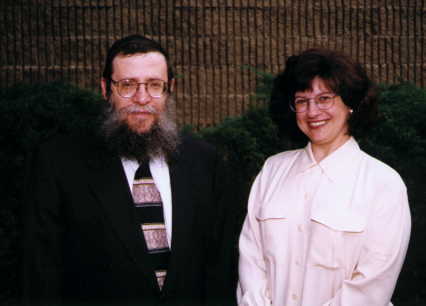
In 1971 (5731 / תשל”א), Rabbi Noson Gurary and his wife, Miriam Gurary, were sent to Buffalo by the Rebbe to establish what would become one of the very first Chabad Houses on a college campus.
Their arrival followed an appeal from members of Buffalo’s Jewish community, who had contacted the Rebbe’s secretariat out of concern for the spiritual well-being of the many Jewish students at the University at Buffalo. At the same time, Rabbi Gurary had expressed his desire to go on shlichus wherever the Rebbe would send him, and Buffalo was chosen as their destination.
The Gurarys established the Chabad House of Buffalo at 3292 Main Street, near the university’s original campus. Rabbi Gurary actively reached out to students across campus, while the Chabad House provided Torah classes, Shabbos meals, Yom Tov celebrations, and personal guidance, creating a welcoming Jewish home for students from every background.
As Chabad’s activities in Buffalo expanded, between 1972 and 1986 Rabbi Gurary brought approximately ten shlichim to broaden Chabad’s work throughout the city and its universities. Over the years, most of these shlichim eventually moved on from Buffalo. Rabbi Heschel and Leah Greenberg and Rabbi Shmaryahu Charitonow are the only ones from this group who remain in Buffalo today.
Rabbi Heschel and Lea Greenberg
In 1972, Rabbi Heschel and Lea Greenberg joined the Chabad work in Buffalo, with Rabbi Greenberg working alongside Rabbi Gurary in reaching Jewish students at the University at Buffalo and helping expand Chabad’s educational and outreach activities on campus.35
In 1993, after more than two decades of working as part of the Chabad House of Buffalo, the Greenbergs’ work separated from Rabbi Gurary’s organization. They continued their activities independently through the Jewish Discovery Center. Over the following decades, Rabbi Heschel Greenberg became widely known for his Torah teaching, writing, lectures, and the long-running television program Let My People Know.
Today, Rabbi Heschel and Lea Greenberg continue their work through the Jewish Discovery Center in Williamsville. They are joined there by two of their sons and their wives: Rabbi Yehoshua and Brocha Leah Greenberg and Rabbi Levi and Rivky Greenberg.
Rabbi Dovid Sholom and Shulamit Pape
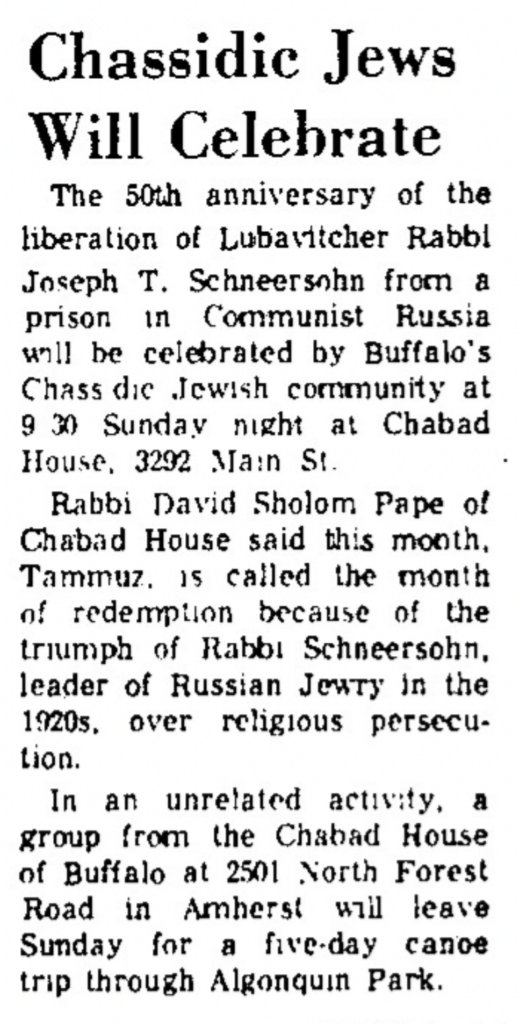
By 1977, Rabbi Dovid Sholom and Shulamit Pape were also serving on shlichus with Chabad in Buffalo, joining the growing team of Shluchim working under the Gurarys.36 Rabbi Pape was publicly identified at the time with the Chabad House of Buffalo and later became widely known as the longtime editor of The Moshiach Times.
Rabbi Gershon and Sarah Leah Oberlander
In the early 1980s, following their marriage in 1982 and a period of study in kollel, Rabbi Gershon and Sarah Leah Oberlander joined the Buffalo shlichus under Rabbi Noson Gurary, serving and strengthening Chabad’s work in the community. Rabbi Gershon Oberlander served as the Campus Rabbi at the State University of New York in Buffalo where he also served as Adjunct Professor of Jewish studies. They remained in Buffalo until shortly before Pesach 1988, when Rabbi Oberlander left to establish Chabad’s work at Oxford University in England. He later continued his shlichus in London and today serves as a Chabad shliach in Hendon.37
New campus in Amherst
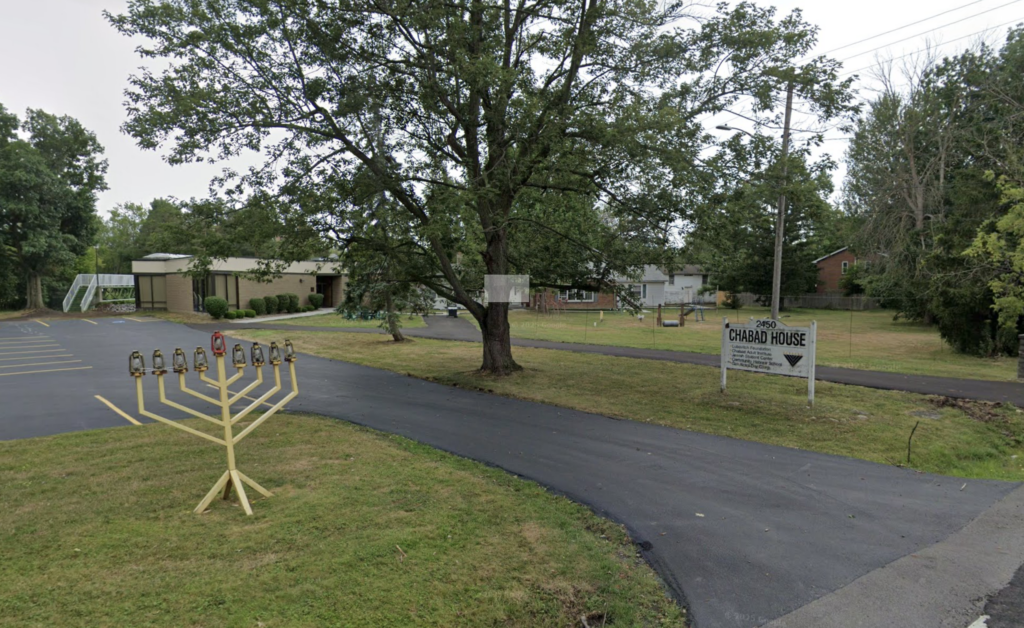
As the University at Buffalo expanded its new campus in Amherst, Chabad established a new center at 185 Maple in Amherst. A few short weeks later, the building had a catastrophic fire which ravaged the building. In November of 1975 Chabad purchased the location at 2450 North Forest Road in Getzville. The Center reopened in 1976. The Chabad House was situated immediately adjacent to the university’s North Campus and provided Chabad with a permanent base for serving the growing student population there. The North Forest Road center became the longtime home of Chabad at the University at Buffalo, hosting student programs, Shabbos and Yom Tov gatherings, Torah classes, and other activities.
Rabbi Noson Gurary also taught accredited university courses in Jewish mysticism, Chassidic philosophy, and Chassidic music, bringing Torah and Chassidus directly into the academic life of the university.
From its beginnings in 1971, the Chabad House became the core of Jewish life at the University at Buffalo, influencing generations of Jewish students and establishing Buffalo as an early chapter in the development of the Chabad on Campus movement.
Torah Temimah and Camp Gan Israel
Rabbi Noson and Miriam Gurary expanded their work beyond the university with the establishment of Torah Temimah Day School in the mid-1970s, providing Buffalo’s Jewish children with both Jewish and general education. Miriam Gurary served as principal and played a central role in the school’s development.
In 1976, Shaina Ebert, later Shaina Charitonow, came to Buffalo to teach at Torah Temimah. 38
Chabad’s educational activities continued through the summer with Camp Gan Israel, providing generations of Buffalo children with a Jewish summer camp experience. Today, the camp continues under Rabbi Shmaryahu Charitonow, together with his son and daughter-in-law, Rabbi Sholom Ber and Rochel Charitonow.
Rabbi Shmuel Yosef and Ester Zirkind
Rabbi Shmuel Yosef and Ester Zirkind also came to Buffalo on shlichus and served as teachers in the Chabad school, helping educate and inspire Jewish children and families throughout the community.39
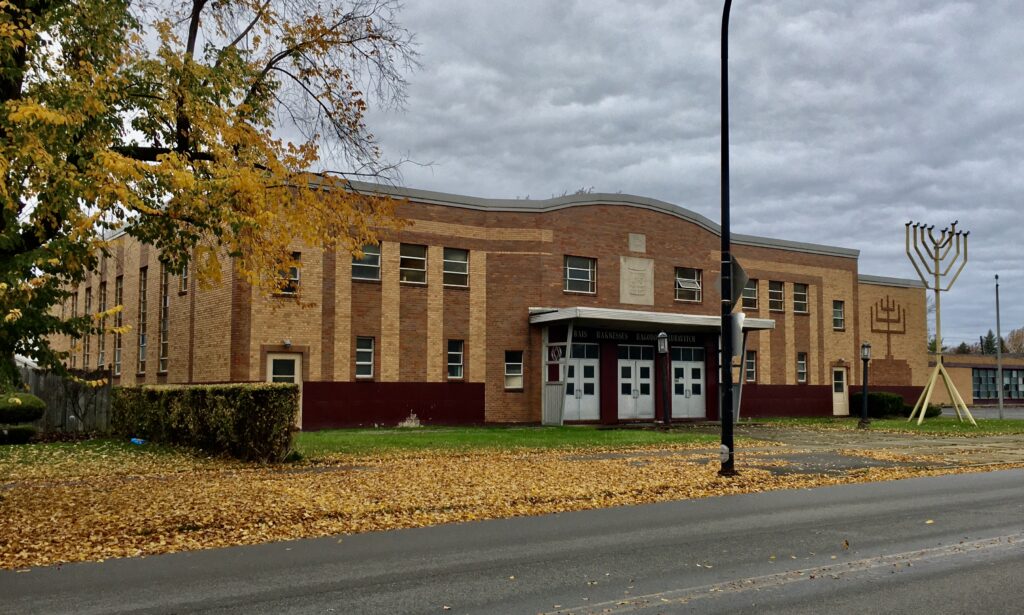
1984: Bais HaKnesset HaGadol–Lubavitch
Alongside Chabad’s work at the University at Buffalo and the growth of Torah Temimah, a broader Chabad community in Buffalo developed under the leadership of Rabbi Noson and Miriam Gurary.
On July 12, 1984, Chabad purchased the synagogue building at 500 Starin Avenue from Temple Beth David–Ner Israel. The building became Bais HaKnesset HaGadol–Lubavitch, commonly known as the Chabad Knesset Center, and developed into a center of Chabad communal life in Buffalo, hosting daily minyanim, Shabbos and Yom Tov services, Torah study, farbrengens, and communal gatherings.
Rabbi Berel Bell served as a Rov at Bais HaKnesset HaGadol–Lubavitch during this time. Today he serves as member of the Rabbinical Court of Montreal.
Rabbi Groner was also in Buffalo [more info requested].
Rabbi Shmaryahu and Shaina Charitonow
Following their marriage in 1985, Rabbi Shmaryahu and Shaina Charitonow spent a year in Brooklyn before settling in Buffalo in 1986 to continue the Chabad shlichus. Shaina went on to work closely with Miriam Gurary on community programs, co-direct Camp Gan Israel, oversee the women’s mikvah, and teach for decades. Rabbi Shmaryahu Charitonow currently serves as the rabbi of the Chabad Knesset Center.
The Next Generation at the University at Buffalo
After many years of dedicated service to the Jewish community of Buffalo and Western New York, Rabbi Noson and Miriam Gurary transitioned the leadership of Chabad’s work at the University at Buffalo to the next generation.
Their sons and daughters-in-law, Rabbi Avraham and Chani Gurary and Rabbi Moshe and Rivka Leah Gurary, continued and expanded the work their parents had begun, providing Jewish education, programming, Shabbos and holiday experiences, and community support for students at the university.
“You Are Not Alone”: The Rebbeim’s Assurance to Buffalo’s Shluchim
Throughout the years, the Rebbe remained personally involved in the Buffalo shlichus. During a particularly difficult period around 1981, Rabbi Gurary shared with the Rebbe how lonely the work could sometimes feel. The Rebbe reassured him: “Since you are doing the work of my father-in-law, the Previous Rebbe, he is with you,” and then added: “And we are also together.” These words became a source of strength and encouragement to Rabbi and Mrs. Gurary as they continued their shlichus in Buffalo.40
Editor’s note: The wording of the Rebbe’s response is especially striking. Rabbi Gurary had never personally received a shlichus from the Frierdiker Rebbe. Yet the Rebbe told him, “Since you are doing the work of my father-in-law, the Previous Rebbe, he is with you.” The Rebbe was thus identifying Rabbi Gurary’s work in Buffalo as a continuation of the shlichus that the Frierdiker Rebbe had established there decades earlier.
This gives added meaning to the Rebbe’s words. In 1943, shortly before Rabbi Hershel Fogelman left for Buffalo, he told the Frierdiker Rebbe that whenever he traveled away he felt alone: “פיל איך זיך עלענט” — “I feel alone.” The Frierdiker Rebbe immediately reassured him: “דו ביסט נישט עלענט, וואו דו טוסט פאר הרבצת תורה בין איך מיט דיר” — “You are not alone. Wherever you work for the strengthening of Torah, I am with you.”41
Nearly forty years later, Rabbi Gurary was carrying forward that same shlichus in Buffalo and expressed the same feeling of loneliness. The Rebbe’s answer appears to make clear that the Frierdiker Rebbe’s assurance to Rabbi Fogelman did not end with Rabbi Fogelman personally. Since Rabbi Gurary was now “doing the work of my father-in-law,” the Frierdiker Rebbe’s promise — “I am with you” — continued with the shliach carrying on that work in Buffalo.
The Rebbe then added a further dimension: “And we are also together.”
Seen in this light, these words were not only personal assurances to the individual shluchim who first heard them. They were brachos connected to the shlichus itself — a shlichus that continues in Buffalo to this day. Those same brachos — “I am with you” and “And we are also together” — continue to accompany and strengthen the shluchim carrying on the Rebbeim’s work in Buffalo today.
1995: Expanding Community-Focused Chabad in Buffalo
Rabbi Laizer and Chani Labkovski
In Adar of 1995 (5755 / תשנ”ה), Rabbi Laizer and Chani Labkovski moved on Shlichus to Buffalo as emissaries of the Lubavitcher Rebbe, Rabbi Menachem Mendel Schneerson, to expand Chabad’s presence and develop a new center focused on serving Jewish individuals and families throughout the broader community.
They established Buffalo’s first community-focused Chabad House, creating a welcoming Jewish center where people of all backgrounds and levels of observance could participate in Jewish life without requiring synagogue membership or affiliation.
Rabbi Laizer and Chani Labkovski initially directed the Jewish Discovery Center alongside Rabbi Heschel and Lea Greenberg, The programming developed by the Labkovski’s subsequently continued and expanded under what is today the Center for Jewish Life, while the Greenbergs continued their work through the Jewish Discovery Center.
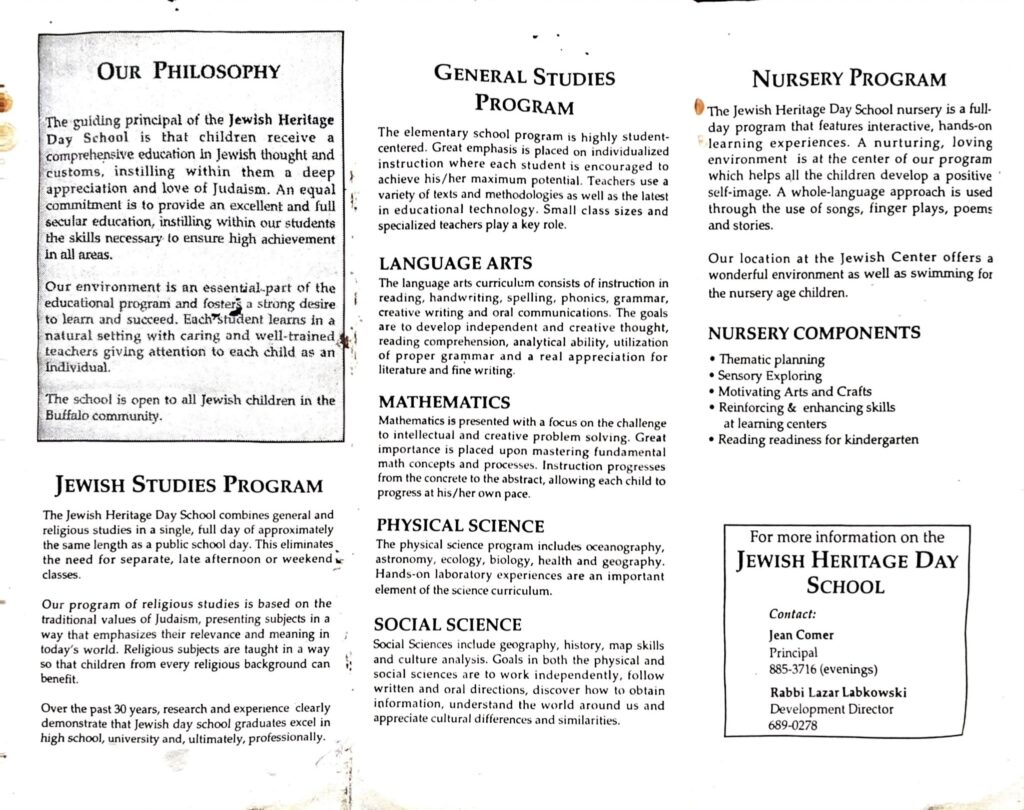
Rabbi Laizer Labkovski was also instrumental in the inception of Buffalo’s local Chabad school, Jewish Heritage Day School, today known as Ohr Temimim, playing a key role in its establishment and development and serving as Development Director during its early years.
Their work grew to include a welcoming synagogue, adult Jewish education through JLI (Jewish Learning Institute) courses, youth and teen programming including CTeen, winter camp, holiday celebrations, family programs, and a year-round daycare center.
In 2000 (5760 / תש”ס), Rabbi Laizer and Chani Labkovski purchased 757 Hopkins Road in Williamsville, providing a permanent home for their growing Chabad center and its expanding educational, religious, and community activities.
A Hebrew School Open to Every Jewish Child
Among their important educational initiatives was the establishment of Buffalo’s first Hebrew School that did not require synagogue membership.
The Hebrew School opened Jewish education to families who might otherwise not have been affiliated with a synagogue, providing children from a wide range of backgrounds with an engaging education in Hebrew, Torah, Jewish holidays, mitzvos, traditions, and Jewish values.
This approach reflected a central principle of Chabad’s work: that Jewish education and meaningful Jewish experiences should be accessible to every Jewish child, regardless of a family’s background or level of observance.
Kosher Meals on Wheels
Recognizing that strengthening Jewish life also meant caring for the physical needs of members of the community, Rabbi Laizer and Chani established Kosher Meals on Wheels.
The program provides kosher meals and personal connection to seniors and homebound individuals, combining practical assistance with companionship and care for members of the Jewish community who might otherwise be isolated.
Through their educational, religious, youth, family, and humanitarian initiatives, Rabbi Laizer and Chani helped expand Chabad’s reach to a new generation of Jewish families throughout Buffalo and Western New York.
The Next Generation
Today, Rabbi Laizer and Chani are joined in their Shlichus by their sons and daughters-in-law, Rabbi Dovid and Chaya’le Labkowski and Rabbi Nochum and Sora’le Labkowski, continuing and expanding the work begun by their parents in 1995.
Together, the family continues to develop Jewish education, community programming, Torah learning, youth activities, holiday celebrations, and outreach, carrying the work forward into a new generation.
2021: Chabad Downtown Buffalo — A New Chapter in Buffalo’s Jewish Renaissance
Rabbi Mendy and Chaya Mushka Labkowski
The Chabad Center for Jewish Life of Buffalo, also known as Chabad Downtown Buffalo, was established in 2021 (5781 / תשפ”א), when Rabbi Mendy and Chaya Mushka Labkowski moved on Shlichus to Buffalo as emissaries of the Lubavitcher Rebbe, Rabbi Menachem Mendel Schneerson, representing the next stage in Chabad’s 130-year legacy in Western New York.
The Center serves as a hub for Jewish engagement, education, and outreach, reaching individuals and families across Elmwood Village, Bryant, Allentown, Downtown, and North Buffalo.
Chabad Young Professionals (CYP) of Buffalo
Rabbi Mendy Labkowski and Chaya Mushka also founded Chabad Young Professionals (CYP) of Buffalo, creating a community for Jewish adults in their 20s and 30s to connect with one another, study Torah, celebrate Jewish life, and build meaningful relationships within the Jewish community.
According to our research and local community studies, Buffalo’s Jewish population is estimated at approximately 25,000 in 2026. As the City of Buffalo — and especially its downtown area — experiences a remarkable cultural and economic renaissance, Chabad Downtown Buffalo is proud to serve this growing and revitalized community.
Guided by the Rebbe’s vision of Ahavat Yisrael — unconditional love for every Jew, the Center provides Torah study, Shabbat and holiday experiences, youth programs, community service, and spiritual guidance, while also supporting the material and emotional needs of members of the community.
Through these initiatives, Chabad Downtown Buffalo and the Chabad Center for Jewish Life of Buffalo continue the long history of Chabad-Lubavitch in the city, honoring the generations of Shluchim, educators, and community leaders who came before while embracing the opportunities of the 21st century and ensuring that the light of Judaism continues to illuminate Buffalo for generations to come.
Sources and Notes
- Nusach Ari Synagogue: A synagogue that follows Nusach Ari, the prayer rite based on the teachings and customs of Rabbi Yitzchak Luria, the Arizal. In Chabad, Nusach Ari refers specifically to the version of the prayer text arranged by Rabbi Schneur Zalman of Liadi, the Alter Rebbe, founder of Chabad. Thus, a historic “Nusach Ari synagogue” generally indicates a congregation whose services followed this Chassidic prayer rite rather than the standard Ashkenaz liturgy.
https://www.chabad.org/library/article_cdo/aid/682092/jewish/The-Siddur.htm
https://www.chabad.org/therebbe/article_cdo/aid/2538975/jewish/Yahrtzeit-of-Alter-Rebbe-24th-Day-of-Teves-5742-1982.htm ↩︎ - Erie County Clerk’s Office, Incorporation Records, Liber 44, p. 66, Certificate of Incorporation of The Lubavitz Synagogue, recorded July 11, 1890.
The original handwritten Certificate of Incorporation records the congregation’s legal incorporation in 1890 under the name “The Lubavitz Synagogue.” It identifies Buffalo as the congregation’s place of business and names its first five trustees as Louis Bernstein, Israel Slater, Peter Rakin, Gusin Dickman and Israel Barkan. The stated purposes of the congregation included the furtherance of religious worship, charitable and benevolent activities, and the maintenance of a Sabbath school. ↩︎ - Selig Adler and Thomas E. Connolly, From Ararat to Suburbia: The History of the Jewish Community of Buffalo(Philadelphia: Jewish Publication Society of America, 1960), p. 195.
Adler and Connolly record that Anshe Lubavitz erected its permanent Pratt Street synagogue in 1911 at a reported cost of $30,000, with seating for approximately 650 people. They note the congregation’s fluctuating financial condition: in 1917 it operated on a budget of only $700, while six years later it had approximately 140 members and annual expenditures of about $5,000.
The book gives the synagogue’s address as 115 Pratt Street. Other later historical material has identified it as 113 Pratt Street; until the original property record or a contemporary map definitively resolves the street number, the main narrative identifies the congregation simply as being on Pratt Street. ↩︎ - Selig Adler and Thomas E. Connolly, From Ararat to Suburbia: The History of the Jewish Community of Buffalo(Philadelphia: Jewish Publication Society of America, 1960), p. 195; gravestone of Jacob and Devorah (Dora) Rosokoff, Lubavitz Congregation Cemetery, Buffalo.
Adler and Connolly describe Jacob Rosokoff (1858–1940) as the strong leader of Anshe Lubavitz for many years and state that he served as president of the Lubavitz Shul for twenty-seven years. He came to Buffalo in 1890 and was remembered as a very religious man who attended services daily.
Rosokoff was also a jeweler and an early pioneer of Buffalo’s motion-picture industry. In 1904, he and his sons opened a penny arcade at 1021 Broadway, which they later converted into a nickelodeon. After moving his business to Lackawanna, he opened one of the earliest movie houses on Ridge Road.
During the Panic of 1907, Rosokoff operated his own bread line in Lackawanna, distributing as many as 200 loaves of bread a day to unemployed laborers.
Adler and Connolly also preserve an anecdote illustrating Rosokoff’s prominence within the congregation: when an Anshe Lubavitz member named Schiller was asked during his citizenship examination, “Who is President?” he answered, “Jacob Rosokoff!”
Rosokoff and his wife Devorah (Dora) share a gravestone in the historic Lubavitz Congregation Cemetery. His Hebrew inscription describes him as an “עסקן בצרכי ציבור,” reflecting his remembered role as a man actively involved in the needs and affairs of the community. The monument identifies Dora Rosokoff as 1860–1924 and Jacob Rosokoff as 1858–1940. ↩︎ - Mendel Gilden, Grampa Gilden’s Diary, August 1903, translated from the original Yiddish in March 2001, family copy.
Gilden’s surviving diary is titled “The Diary of my trip to the United States” and begins on 10 Av 5663 — August 3, 1903, when he left his family and began his journey to America. His own contemporary account therefore establishes that he was still beginning his emigration from Russia in August 1903.
The Jewish Buffalo History Center, based on “From Ararat To Suburbia” page 195 gives 1902 as the year Gilden moved to Buffalo. That date conflicts with Gilden’s own first-person diary and is therefore not followed here. The chronology in this article is based on Gilden’s surviving contemporary account.
http://family.chernoff.com/Gilden/Mendel%20Gilden%20Diary.pdf
http://family.chernoff.com/Gilden/Mendel%20Gilden%20Diary%20English.pdf
https://jewishbuffalohistory.org/synagogues/anshe-lubavitz/ ↩︎ - Dr. David L. Frey, “Daharoa Beshincovichi — The Road to Beshincovichi,” Belarus SIG Online Newsletter, Issue No. 3, May 1999, JewishGen.
Frey, a descendant of the family, preserves the family tradition identifying Rabbi Avram Yisroel Gildensohn as a Chassidic rabbi of Beshenkovichi and identifies Rev. Menachem Mendel Gildin of Buffalo, New York, as his son. He also records that the family possessed Yiddish letters written by Rabbi Avram Yisroel to his son in Buffalo and that he brought original family passports, photographs and other historical documents with him when he traveled to Beshenkovichi to investigate the family history.
JewishGen — The Road to Beshincovichi ↩︎ - Beshenkovichi Jewish communal history; Rabbi Yosef Yitzchak Schneersohn, “The Schoolteachers of Beshenkovitz”; Chabad.org, “Rabbi Chaim Mordechai Aizik Hodakov (1902–1993).”
Historical material on Beshenkovichi records that in 1896 the town had five synagogues, two of which belonged specifically to Lubavitch Chassidim.
In a diary entry dated 14 Sivan 5662 — June 19, 1902, the Previous Rebbe describes encountering two Chassidic schoolteachers from Beshenkovichi, Reb Peretz and Reb Menachem Mendel, walking home from Lubavitch while reviewing a discourse of Chassidus. He records that 1902 was their thirty-third annual Shavuos journey to Lubavitch and that they had been making the trip every year since 1871.
The Reb Menachem Mendel in this account was not Rabbi Gilden; the chronology makes such an identification impossible. The account is significant because it provides contemporary evidence of the close relationship between Beshenkovichi and Lubavitch during Rabbi Gilden’s lifetime.
Rabbi Chaim Mordechai Aizik Hodakov was born in Beshenkovichi in 1902. He later became a close aide of the Previous Rebbe and served for more than forty years as Chief of Staff of the office of the Lubavitcher Rebbe.
https://www.mishpoha.org/biblioteka/seriya-moe-mestechko/na-kachelyakh-vremeni/1234-legendy-i-byli-beshenkovichej
https://www.chabad.org/library/article_cdo/aid/113900/jewish/The-Schoolteachers-of-Beshenkovitz.htm
https://www.chabad.org/news/article_cdo/aid/133876/jewish/Rabbi-Chaim-Mordechai-Aizik-Hodakov-1902-1993.htm ↩︎ - Mendel Gilden, Grampa Gilden’s Diary, August 1903, translated from the original Yiddish in March 2001, family copy.
Gilden’s diary follows his journey through Danzig, Libau, Copenhagen, Hull and Liverpool as he traveled toward America. During severe seasickness at sea, he records finishing his prayers and making Kiddush on Friday night. On Shabbos morning, while the ship continued to rock, he prayed and reviewed the weekly Torah portion while lying down.
Later, while temporarily housed among emigrants in England, Gilden was concerned about the kashrus of the food being served. He questioned another Jewish emigrant and then investigated for himself, noting the kosher identification on the meat, its salting and the distinction between the milk and meat meals before deciding that he could eat.
http://family.chernoff.com/Gilden/Mendel%20Gilden%20Diary.pdf
http://family.chernoff.com/Gilden/Mendel%20Gilden%20Diary%20English.pdf ↩︎ - FOOTNOTE 8 — COPY THIS INTO WORDPRESS
Buffalo & Erie County Public Library, “Births, Deaths, and Marriages Found in Select Buffalo and Erie County Publications”; Rabbi Chaim Dalfin, “Who Was the Chabad Leader in Buffalo in Early 1900s?”
The Buffalo & Erie County Public Library index records “Gilden, Mendel L., Rabbi” with a date of death of November 10, 1933. Rabbi Chaim Dalfin’s historical presentation reproduces photographs of the adjoining gravestones of Reb Menachem Mendel Leib and Baila Gilden and identifies their burial with Buffalo’s Lubavitch congregation. The same presentation includes a photograph identifying Gilden as a shochet and leader of Buffalo’s Lubavitch shul.
https://www.buffalolib.org/sites/default/files/special-collections/guides/Births%20Deaths%20and%20Marriages%20Found%20in%20Local%20Publications.pdf
https://crownheights.info/chabad-news/875229/chabad-history-with-rabbi-dalfin-who-was-the-chabad-leader-in-buffalo-in-early-1900s/ ↩︎ - FOOTNOTE 9 — COPY THIS INTO WORDPRESS
Louis Silverstein, “Buffalo’s Last Shochet Describes Jewish Community Since 1920’s,” Buffalo Jewish Review Supplement, July 9, 1976, p. 2; Jewish Telegraphic Agency, April 20 and April 30, 1933.
Silverstein, who had lived in Buffalo since 1923 and was closely involved in the Orthodox community, recalled the synagogues and rabbinic leaders of Buffalo’s East Side and stated explicitly: “The Lubavitch Shule on Pratt Street had Rabbi Joshua Zambrowsky.”
Contemporary JTA reports establish that Rabbi Zambrowsky was invited in April 1933 to become Chief Rabbi of Buffalo’s newly organized Orthodox Jewish Council and that he resigned his Syracuse position and accepted the Buffalo appointment before Rabbi Gilden’s death in November of that year.
https://www.jta.org/archive/rabbi-s-joshua-zambrowsky-of-the-congregation-poiley
https://www.jta.org/archive/buffalos-chief-rabbi-selected-in-spansyracuspans ↩︎ - Selig Adler and Thomas E. Connolly, From Ararat to Suburbia: The History of the Jewish Community of Buffalo(Philadelphia: Jewish Publication Society of America, 1960), p. 195.
Adler and Connolly state that Cantor Perez Freedman began officiating at Anshe Lubavitz in 1923 and continued until the synagogue closed its doors on Pratt Street. They describe him as a businessman with a fine voice who had received choir training in Europe, and note that he became a popular cantor in downtown Buffalo and retained devoted followers for many years. ↩︎ - Rabbi Yosef Yitzchak Schneersohn, Igros Kodesh Admur HaRayyatz, Vol. 16, pp. 261–262, letter dated 7 Mar-Cheshvan 5689 (October 21, 1928). In the letter, the Previous Rebbe responds to Rabbi Chaim Davidovich regarding the religious situation in Buffalo and discusses Jewish education, cooperation within the community, qualified teachers, curriculum, and the schedule of Torah study. ↩︎
- Louis Silverstein, “Buffalo’s Last Shochet Describes Jewish Community Since 1920’s,” Buffalo Jewish Review Supplement, July 9, 1976, p. 2; Jewish Telegraphic Agency, April 20 and April 30, 1933.
Louis Silverstein, who arrived in Buffalo in 1923 and was deeply involved in the city’s Orthodox Jewish community, later recalled the synagogues and rabbis of Buffalo’s East Side. In identifying the rabbis of the neighborhood congregations, he stated explicitly:
“The Lubavitch Shule on Pratt Street had Rabbi Joshua Zambrowsky.”
Contemporary reports establish that Rabbi Zambrowsky left Congregation Poiley Tzedeck in Syracuse and moved to Buffalo in the spring of 1933. The precise date on which he formally assumed the Anshe Lubavitz pulpit has not yet been located, but the surviving testimony directly identifies him as the congregation’s rabbi during his Buffalo years.
Jewish Buffalo History Center — original Buffalo Jewish Review article
JTA — April 20, 1933
JTA — April 30, 1933 ↩︎ - “Orthodox Jews Welcome Rabbi: New Leader Arrives Here to Preside Over Local District,” Buffalo newspaper, May 3, 1933; Jewish Telegraphic Agency, “Funeral Services for Chief Rabbi of Buffalo,” November 9, 1932.
A contemporary Buffalo newspaper report published on May 3, 1933, immediately after Rabbi Zambrowsky’s arrival, announced that “a new chief rabbi took over the leadership of Buffalo’s orthodox Jewish community today.”
The report states that Rabbi Zambrowsky had arrived in Buffalo the previous day at the invitation of the Buffalo Council of Jewish Congregations. It describes the Council as comprising nine synagogues and three temples and explains that his principal communal role was to serve as chief rabbi of Buffalo’s Orthodox rabbis and affiliated Orthodox congregations.
Rabbi Zambrowsky’s appointment followed the death in 1932 of Rabbi Avraham Meir Franklin, who had likewise been identified in contemporary sources as Buffalo’s Chief Rabbi and whose gravestone identifies him as אב״ד דבאפאלי — Av Beis Din of Buffalo. The title “Chief Rabbi” should not necessarily be understood as one uninterrupted formal office passing directly from Franklin to Zambrowsky, since Buffalo’s Orthodox communal structures changed over time.
JTA — Rabbi Avraham Meir Franklin, November 9, 1932 ↩︎ - “Orthodox Jews Welcome Rabbi,” Buffalo newspaper, May 3, 1933; Jewish Telegraphic Agency, “Kashruth Position for Rabbi Zambrowsky,” July 20, 1933.
The May 3, 1933 Buffalo article stated that Rabbi Zambrowsky would be in charge of kosher slaughtering at the Jacob Dold Packing Company of Buffalo.
On July 20, 1933, JTA reported that he had been appointed an inspector in the New York State Department of Agriculture and Markets, with responsibility for supervising enforcement of laws relating to kashrus. The same report identifies him as a member of the executive board of the Union of Orthodox Rabbis of the United States. Contemporary reporting also identifies him with the national leadership of the Mizrachi Organization.
JTA — “Kashruth Position for Rabbi Zambrowsky,” July 20, 1933 ↩︎ - Gravestone of Rabbi Yehoshua Halevi Zambrowsky, Lubavitz Congregation Cemetery, Cheektowaga, New York; Kevarim.com.
Rabbi Zambrowsky’s gravestone reads in part:
הרב אב״ד דבאפפאלא ומלפנים מ״ץ דווארשא
יהושע ב״ר ישראל יצחק הלוי זאמבראסקי
מחבר ספר חמדת יהושע
נפטר י״א אלול תרצ״ט
The inscription identifies him as Av Beis Din of Buffalo, formerly of the Warsaw community, Rabbi Yehoshua son of Rabbi Yisrael Yitzchak Halevi Zambrowsky, author of Chemdat Yehoshua, and records his passing on 11 Elul 5699.
His burial in the historic Lubavitz Congregation Cemetery provides another surviving link between Rabbi Zambrowsky and Buffalo’s Anshe Lubavitz community.
Kevarim — Rabbi Zambrowsky ↩︎ - Rabbi Hershel Fogelman, “Stories and Memories,” in Memento from the Wedding of Rabbi Mendel & Mushkie Fogelman, 2 Marcheshvan 5775 (October 26, 2014), Story 15. Rabbi Fogelman, who served in Buffalo beginning in 1943, referred to Rabbi Dov Berish Zuckerman explicitly as “the chief Rabbi of Buffalo.” See also BoroPark24, “Memory Lane: Rav Dov Berish Zuckerman, zt”l,” which states that Rabbi Zuckerman was appointed Chief Rabbi of Buffalo in 1942 and held the position for twenty-five years.
https://www.boropark24.com/news/memory-lane-rav-dov-berish-zuckerman-zt-l
https://teshura.com/Fogelman%20-%20Baron%20-%20Marchesvan%202%2C%205775.pdf ↩︎ - Rabbi Yosef Yitzchak Schneersohn, Igros Kodesh, Vol. 6, p. 409, letter dated 7 Elul 5702 (August 20, 1942). The letter congratulates Rabbi Dov Berish Zuckerman upon accepting the rabbinate of Anshe Lubavitz in Buffalo.
https://chabadpedia.co.il/index.php/משתמש:מענדל_גורארי%27/דוב_בעריש_צוקרמן ↩︎ - Rabbi Shimon Goldman, From Shedlitz to Safety, pp. 184–185. Goldman describes Rabbi Zuckerman’s stature in Buffalo, his Torah study and character, the Previous Rebbe’s high regard for him, Jews traveling from Rochester to consult him, his work with gittin, and his supervision of shechita. ↩︎
- Erie County Clerk’s Office, Corporation Records, Corporation Box 10550. ↩︎
- Rabbi Yehuda Tzvi (Hershel) Fogelman, Ten LaChacham (תן לחכם), “Reshimas Zichronos V’Sipurim” (רשימת זכרונות וסיפורים), sec. 18 (י״ח). In his original Hebrew and Yiddish recollection, Rabbi Fogelman writes that in a yechidusat the end of Menachem Av 5703 (1943), before leaving for Buffalo to establish a yeshiva, the Previous Rebbe blessed him with success and instructed him to work in Buffalo’s synagogues “בא להוסיף ולא לגרוע” — “to add and not to detract.” Fogelman then told the Rebbe, “פיל איך זיך עלענט” — “I feel alone” whenever he traveled outside the city. The Rebbe immediately answered: “דו ביסט נישט עלענט, וואו דו טוסט פאר הרבצת תורה בין איך מיט דיר” — “You are not alone. Wherever you work for the strengthening of Torah, I am with you.” Fogelman concludes: “ובאמת היה הצלחה גדולה” — “And in truth, there was great success.”
The later account published in Rabbi Hershel Fogelman, “Stories and Memories,” in Memento from the Wedding of Rabbi Mendel & Mushkie Fogelman, 2 Marcheshvan 5775 (October 26, 2014), Story 18, pp. 16–17, adds that Rabbi Fogelman wrote the Rebbe’s words on a small piece of paper and kept them in his wallet for the rest of his life.
https://teshura.com/Fogelman%20-%20Baron%20-%20Marchesvan%202%2C%205775.pdf ↩︎ - Kovetz Lubavitch, Issue 2 (קובץ ליובאוויטש, גליון ב׳), p. 25. The publication identifies the distinguished Buffalo rabbi Rabbi Michael Lifshitz as the Rosh Yeshiva of Yeshivas Achei Tmimim in Buffalo.
https://hebrewbooks.org/25448 ↩︎ - Kovetz Lubavitch, Issue 2 (קובץ ליובאוויטש, גליון ב׳), p. 30.
https://hebrewbooks.org/25448 ↩︎ - Erie County Clerk’s Office, Corporation Records, Corporation Box 26399. Records concerning the sale of the property at 5 Lovering Avenue from Yeshivos Tomchei Tmimim Lubavitz, Inc. ↩︎
- S. Z. Levin, “A Lifetime of Shlichus,” Beis Moshiach, Issue 967, March 25, 2015; and Chabad.org, “Teacher of Generations: Rabbi Dovid Edelman’s 70 Years of Service.” The Beis Moshiach biography records that after nearly a year in Bridgeport and nine months in Pittsburgh, Rabbi Edelman went to Buffalo “to run the yeshiva there which was in its infancy” and spent three years in Buffalo. Chabad.org independently records that after Pittsburgh he was sent to Buffalo, where he directed the Chabad school until he was replaced by Rabbi Yitzchok Dovid Groner, and that his next assignment, after his marriage in 1948, was Boston. Together with Rabbi Groner’s documented arrival in Buffalo in 1948, these accounts place Rabbi Edelman’s arrival in Buffalo in 1945.
https://beismoshiach.org/articles/a-lifetime-of-shlichus
https://www.chabad.org/news/article_cdo/aid/2613081/jewish/Teacher-of-Generations-Rabbi-Dovid-Edelmans-70-Years-of-Service.htm ↩︎ - “Mrs. Chana Popack, 98, AH,” Anash.org; and “Mrs. Chana Popack, 98, OBM,” COLlive. Mrs. Popack’s biographical accounts record that after arriving in the United States in 1946 she was sent by the Frierdiker Rebbe to teach in Buffalo, where she met Rabbi Aharon Popack. COLlive records that the Frierdiker Rebbe was mesader kiddushin at their wedding. Anash.org records that the couple remained on shlichus in Buffalo for two years before being sent to Brooklyn to work at Beis Rivkah.
https://anash.org/mrs-chana-popack-98-ah/
https://collive.com/mrs-chana-popack-98-obm/ ↩︎ - Rabbi Shimon Goldman, From Shedlitz to Safety, pp. 182–185; Menachem Posner, “Rabbi Shimon Goldman, 91, Communal Leader Survived World War II in Shanghai,” Chabad.org. On p. 182, Rabbi Goldman describes arriving in Buffalo during the transition following Rabbi Fogelman’s leadership and states that Rabbi Aharon Popack and Rabbi Dovid Edelman “took control of the yeshiva in Buffalo.” He also records that Rabbi Popack immediately assigned him a class at the Butler Avenue school. The following pages describe his educational work in Buffalo, his relationship with Rabbi Zuckerman and the local shochtim, and his study of shechita. Chabad.org records that Goldman married Esther Gordon in 1949, after which the couple settled in Philadelphia and later Brooklyn.
Note on Rabbi Goldman’s recollection: On p. 182, Goldman remembers Rabbi Fogelman’s next yeshiva as New Haven. Other documentation, including Rabbi Fogelman’s own history, places his post-Buffalo leadership in Worcester. Goldman’s account is used here for the events he personally encountered in Buffalo — particularly the leadership of Popack and Edelman and his own arrival at the Butler Avenue yeshiva.
https://store.kehotonline.com/prodinfo.asp?number=EH-FROM
https://www.chabad.org/news/article_cdo/aid/3479465/jewish/Rabbi-Shimon-Goldman-91-Communal-Leader-Survived-World-War-II-in-Shanghai.htm ↩︎ - “Rabbi Shmuel Lazar OBM,” COLlive. The biographical account states that beginning in 5708 (1947–1948) and continuing until his marriage, Rabbi Shmuel Lazar was sent by the Frierdiker Rebbe as a shliach to establish Chabad schools in Buffalo, Rochester, New Haven, and Worcester, Massachusetts. The source does not specify how long he remained in Buffalo individually, so no specific duration is assigned to his Buffalo service in the article.
https://collive.com/rabbi-shmuel-lazar-obm/ ↩︎ - “She Understood Humanity: Rebbetzin Devorah Leah Groner,” Anash.org. Biographical account of Rebbetzin Devorah Groner and her pioneering educational shlichus, including her years in Buffalo.
“After eight years in Buffalo, they returned to Crown Heights. Upon arrival, Devorah had an extended yechidus with the Rebbe. She described the struggles they were facing in Buffalo and how everything seemed to be an uphill battle, never reaching a plateau where she could rest for a minute.
For over 45 minutes, the Rebbe listened attentively to everything she said. Then the Rebbe, distressed by what he heard, started coughing and couldn’t catch his breath. Devorah looked around for a button to ring or someone to call, but to no avail. After a minute, the Rebbe caught his breath and the yechidus was over. From then on, Devorah decided never to burden the Rebbe with her difficulties in person, only through written correspondence.”
https://anash.org/she-understood-humanity-rebbetzin-devorah-leah-groner-ah/ ↩︎ - Menachem Posner, “Mrs. Devorah Groner, 92, Pioneering Australian Jewish Leader,” Chabad.org, May 28, 2018.
https://www.chabad.org/news/article_cdo/aid/4043728/jewish/Mrs-Devorah-Groner-92-Pioneering-Australian-Jewish-Leader.htm ↩︎ - A Chassidisher Derher, Issue 71 (Av 5778 / August 2018), p. 50. Recounts Rabbi Yitzchok Dovid Groner’s yechiduswith the Rebbe regarding the difficulties he was experiencing in his work at the yeshiva in Buffalo.
https://derher.org/wp-content/uploads/71-Av-5778-10.pdf ↩︎ - Erie County Clerk’s Office, Deed Records, Liber 145, p. 361. Incorporation of Yeshiva Achei Tmimim of Buffalo. ↩︎
- Jewish Educational Media (JEM), Rabbi Hershel Slansky, Document 1742. Rabbi Slansky recalls that following his marriage in 1954, the Rebbe sent him to Buffalo to lead the yeshiva, where he remained until 1959.
https://videos.jem.tv/documents/1742 ↩︎ - Shneur Zalman Levin, “Harav Dovid Schochet A”H: A Firm & Compassionate Rav,” Beis Moshiach Magazine, reproduced by ChabadInfo. Includes Rabbi Dovid Schochet’s recollections relevant to the history of Chabad activity in Buffalo.
https://chabadinfo.com/magazine/harav-dovid-schochet-ah-a-firm-compassionate-rav/ ↩︎ - Ellen Goldstein, “Lea Greenberg, Chani Labkovski, Brocha Leah Greenberg, Rivky Greenberg: Women of Valor,” Jewish Journal of Western New York, July 2018, p. 18. Lea Greenberg recalls arriving in Buffalo on Columbus Day 1972 after Rabbi Heschel Greenberg was recruited by Rabbi Noson Gurary to work with Jewish students at the University at Buffalo. She also recalls that before leaving New York, they had a private audience with the Rebbe, who told them “to go with joy.”
https://buffalojewishfederation.org/wp-content/uploads/2018/06/JJWNY_July_2018-1.pdf ↩︎ - Buffalo Courier-Express, July 15, 1978, p. 41, accessed through NYS Historic Newspapers. Contemporary newspaper documentation relating to Rabbi Dovid Sholom Pape and Chabad activity in Buffalo.
https://www.nyshistoricnewspapers.org/?a=d&d=coe19780715-01.1.41&e=——-en-20–1–txt-txIN———- ↩︎ - “Rabbi Gershon Oberlander,” Chabad of Hendon. Biographical profile documenting Rabbi Oberlander’s earlier service as Campus Rabbi at the State University of New York at Buffalo and as an adjunct professor of Jewish Studies.
https://www.chabadlive.com/about/team/rabbi-gershon-overlander-2/ ↩︎ - Teshura LeChatunah: Charitonow–Sheiman, 25 Sivan 5773 (2013). Includes biographical information on Shaina Rochel Charitonow, recording that Shaina Ebert came to Buffalo in 1976 at age 19 to teach at Torah Temimah, later married Rabbi Shmaryahu Charitonow, and returned with him to Buffalo, where she was involved in education, Camp Gan Israel, the women’s mikvah, and community life.
https://www.teshura.com/teshurapdf/Charitonow-Sheiman%20-%20Sivan%2025%2C%205773.pdf ↩︎ - Ester Zirkind, “Armament of the Soul,” Mishpacha. Zirkind recalls moving to Buffalo with her husband, Rabbi Shmuel Yosef Zirkind, on shlichus and their work as teachers in the local Chabad school.
https://mishpacha.com/armament-of-the-soul/ ↩︎ - Rabbi Noson Gurary, “Riots, Bombings, and Chasidishe Music,” Anash.org. Gurary recalls his shlichus in Buffalo and the Rebbe’s reassurance during a period of loneliness that the Frierdiker Rebbe was with him in his work, adding, “And we are also together.”
https://anash.org/riots-bombings-and-chasidishe-music/ ↩︎ - Rabbi Yehuda Tzvi (Hershel) Fogelman, Ten LaChacham (תן לחכם), “Reshimas Zichronos V’Sipurim” (רשימת זכרונות וסיפורים), sec. 18 (י״ח). Rabbi Fogelman records that at the end of Menachem Av 5703 (1943), shortly before traveling to Buffalo to establish a yeshiva, he entered yechidus with the Previous Rebbe. He told the Rebbe that whenever he traveled away, “פיל איך זיך עלענט” — “I feel alone.” The Rebbe immediately replied: “דו ביסט נישט עלענט, וואו דו טוסט פאר הרבצת תורה בין איך מיט דיר” — “You are not alone. Wherever you work for the strengthening of Torah, I am with you.” Fogelman concludes his account: “ובאמת היה הצלחה גדולה” — “And in truth, there was great success.” ↩︎