
הרב שמחה ב״ר צבי הירש פאלטרוביץ ז״ל
Chief Rabbi of Buffalo 1880-1900’s
Yahrzeit: 27 Elul | יארצייט: כ״ז אלול
Kever Location: Riverside Cemetery, 12 Market Street, Saddle Brook, NJ 07663, in the Congregation Ohab Zedek section.
Rabbinic Service in Buffalo: Approximately 1880–1912
Table of Contents
Overview
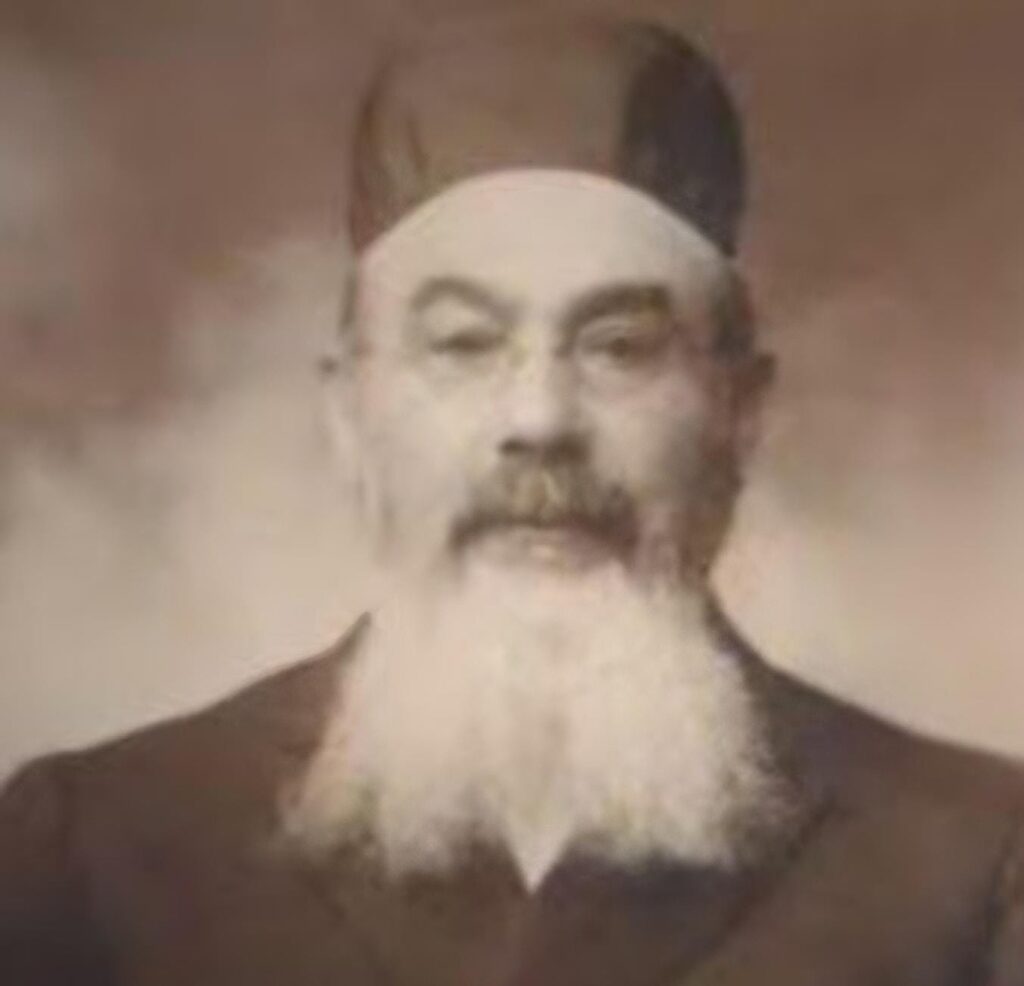
Rabbi Simcha Paltrovich, known in English as Rabbi Simon Paltrovitch, was a Polish-born Torah scholar, a rav of Buffalo’s Congregation Bris Shalom, and the author of several seforim. He immigrated to America in 1872 and subsequently served Buffalo’s Orthodox Jewish community for approximately thirty-two years, beginning around 1880. Around 1912, he left Buffalo and settled in New York City, spending his later years closer to his children. His writings include Simchas Hegyon, Keser Tzvi, Kol Simcha, and Simchas Avos, preserving his Torah scholarship for future generations. He passed away on 27 Elul 5686 — September 6, 1926, and is buried in Riverside Cemetery in Saddle Brook, New Jersey.1
Birth and Early Life in Poland
Rabbi Simcha Paltrovich was born in Łuby-Kurki, near Nowogród, Poland, to Rabbi Tzvi Hirsch and Rebbetzin Chana. His exact birth year is uncertain: surviving records suggest approximately 1840–1843.2
Coming to America and Settling in Buffalo
Rabbi Paltrovich came to America in 1872. This was his immigration year, not his confirmed arrival year in Buffalo. He is documented in Massachusetts in 1876 and in Buffalo by the 1880 census. Together with the later anniversary report, these records suggest that his Buffalo rabbinate began around 1879–1880 and continued until approximately 1912.3
Rav of Buffalo’s Congregation Bris Shalom
Rabbi Simcha Paltrovich served as the religious leader of Congregation Bris Shalom, one of Buffalo’s longstanding Orthodox shuls. Founded in 1865, the congregation grew as Eastern European Jewish immigrants settled in the city.
In 1893, the congregation moved to 171 Pine Street, between William and Clinton Streets, on Buffalo’s East Side. This location gave it the familiar name “Pine Street Shul.” Rabbi Paltrovich’s association with the congregation places him within an important chapter of Jewish religious life in Buffalo’s old immigrant neighborhood.4
Rabbi Simcha Paltovitch left Buffalo by 1912.
In late November 1917, Congregation Brith Sholom elected Rabbi Israel Freelander to a one-year term, as reported in The Hebrew Standard on December 7, 1917.5
The 1919 Directory of Jewish National and Local Organizations in the United States lists Rabbi Avraham Meir Franklin as Rabbi of Brith Shalom.
Rabbi Nissan Markel was Rav of Bris Shalom from 1921-1947 (26 years).
Rabbi Dov Ber (Berish) Zuckerman was Rav of Bris Shalom from 1945-1968 (23 years).
Rabbi Simcha Paltrovich’s Seforim
Rabbi Paltrovich’s published works preserve his Torah explanations, derashos, and teachings on Jewish conduct. Several are available in digitized form, allowing readers to learn directly from the writings of this Buffalo rav.
Simchas Hegyon — שמחת הגיון
Simchas Hegyon contains Torah explanations and derashos. Its first two parts are catalogued as published in Buffalo in 5663/1903, dealing respectively with the Torah and the haftoros. A third part appeared in Jerusalem in 5682/1922.6
Link to his Sefer on Hebrew Books — Part I: https://hebrewbooks.org/2678
Link to his Sefer on Hebrew Books — Part II: https://hebrewbooks.org/2679
Link to his Sefer on Hebrew Books — Part III: https://hebrewbooks.org/2680
Keser Tzvi — כתר צבי
Another of Rabbi Paltrovich’s published works is Keser Tzvi. A digitized copy is preserved by HebrewBooks under his name.
Link to his Sefer on Hebrew Books: https://hebrewbooks.org/38803
Kol Simcha — קול שמחה
Kol Simcha, published in Jerusalem in 5673/1913, contains derashos for various occasions and insights on the five Chumashim. Its approbations include one from Rabbi Yitzchak Yerucham Diskin.7
Link to his Sefer on Hebrew Books: https://hebrewbooks.org/38183
Simchas Avos — שמחת אבות
Rabbi Paltrovich also wrote Simchas Avos, a commentary on Pirkei Avos incorporating Torah interpretations and Midrashic teachings. The sefer preserves his explanations of the Mishnah’s lessons on character, conduct, and avodas Hashem.8
Link to his Sefer on Hebrew Books: https://hebrewbooks.org/2677
His Family
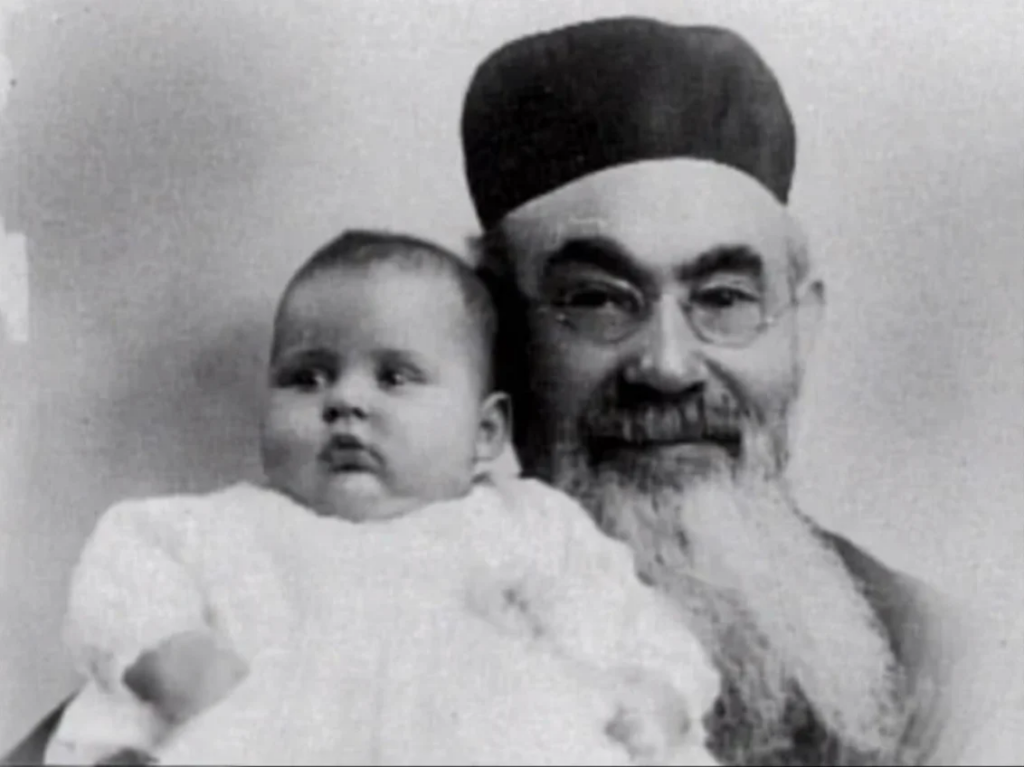
Rabbi Simcha Paltrovich married Rebbetzin Tzipporah, known in America as Sophia, of the Levitansky family, in Suwałki in 1862. After he immigrated to America in 1872, she followed with children in 1873. Their family grew during their American years, and surviving records trace their household from Massachusetts to Buffalo and later to New York.
The genealogical study identifies seven children: Paltiel, also known as Phillip; Devorah, known as Dora; Leah; Myer; Celia; Sarah; and Harry. The family’s names appear in American records under several spellings, including Paltrovitch, Paltrovitz, and Paltrowitz. Their daughters’ married names included Leah Block, Celia Elfenbein, and Sarah Rosen.9
Fifty Years of Marriage
In 1912, Rabbi Paltrovich and Rebbetzin Tzipporah celebrated their fiftieth wedding anniversary in New York, surrounded by their children and grandchildren. A contemporary report, reproduced in the family study under the heading “Hebrew Golden Wedding,” describes a celebration attended entirely by relatives. Their children accompanied them during the ceremony, with the youngest grandchildren taking part as well. Rebbetzin Tzipporah received a new wedding ring, and a festive dinner followed, with speeches and a photograph of the couple presented to each guest in a gold-colored frame.
The report also offers a glimpse into their lives after Buffalo. Rabbi Paltrovich had recently moved to New York after more than thirty-two years of rabbinic service in Buffalo, wishing to spend his later years near his children. Both husband and wife were described as active and in good health. He remained occupied with his Torah writings and was preparing Kol Simcha, which appeared the following year.10
Rebbetzin Tzipporah’s Passing
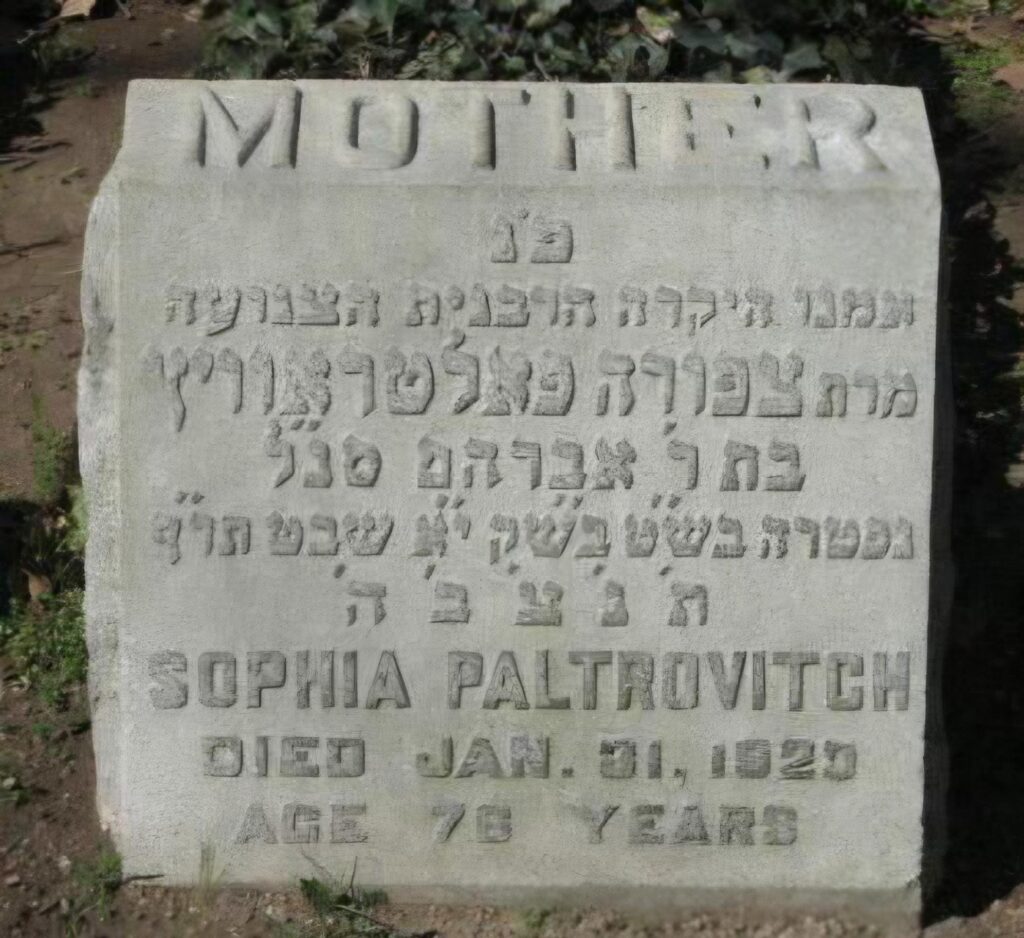
Rebbetzin Tzipporah passed away on January 31, 1920, after more than fifty-seven years of marriage. Her death notice in The New York Times identified her as the wife of Rabbi Simon Paltrovitch and the mother of Myer, Harry, Leah Block, and Sarah Rosen. Her funeral was announced for the following afternoon from the family’s residence at 4 East 120th Street. The notice requested that newspapers in Chicago, Pittsburgh, and Buffalo also publish the announcement, reflecting the family’s connections to those cities.
She is buried in Riverside Cemetery in Saddle Brook, New Jersey, where her matzeivah bears the name Sophia Paltrovitch.11
His Later Marriage
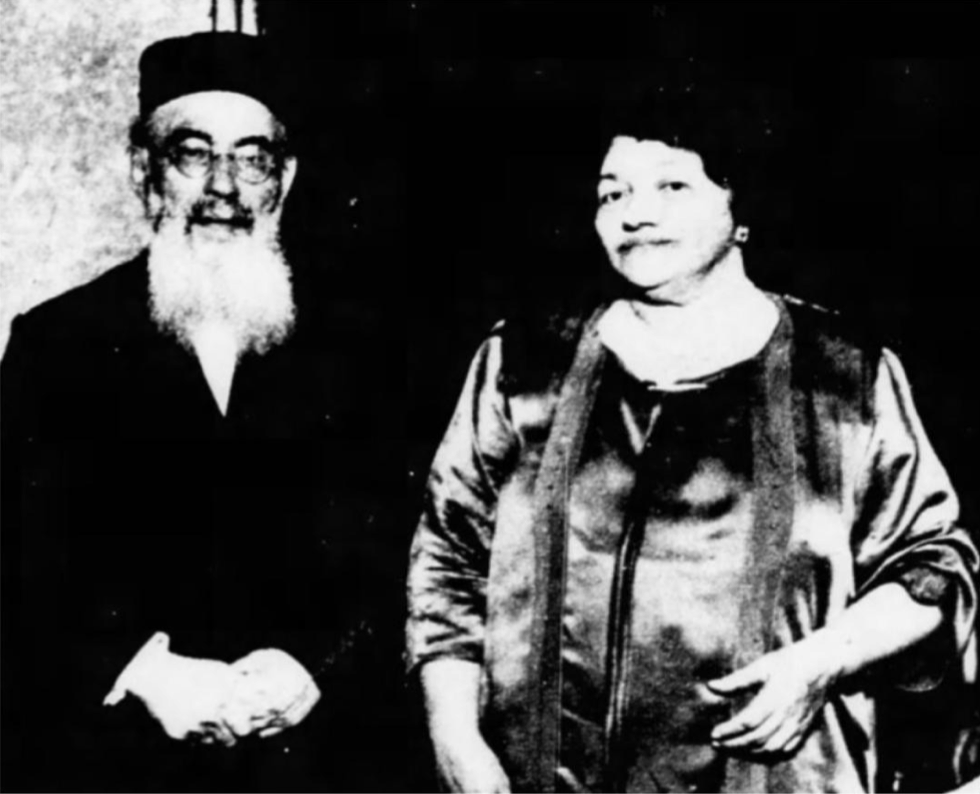
After Rebbetzin Tzipporah’s passing, Rabbi Paltrovich remarried Regina Lieberman during his final years in New York.12
His Final Years Among His Family
Rabbi Paltrovich spent his final years in New York, near his children. He passed away at the home of his daughter, Sarah, Mrs. Charles Rosen, at 75 Fort Washington Avenue, on September 6, 1926 — 27 Elul 5686. His obituary reported that he was survived by Mrs. Rosen, two sons, and another daughter.13
Passing and Burial in Riverside Cemetery
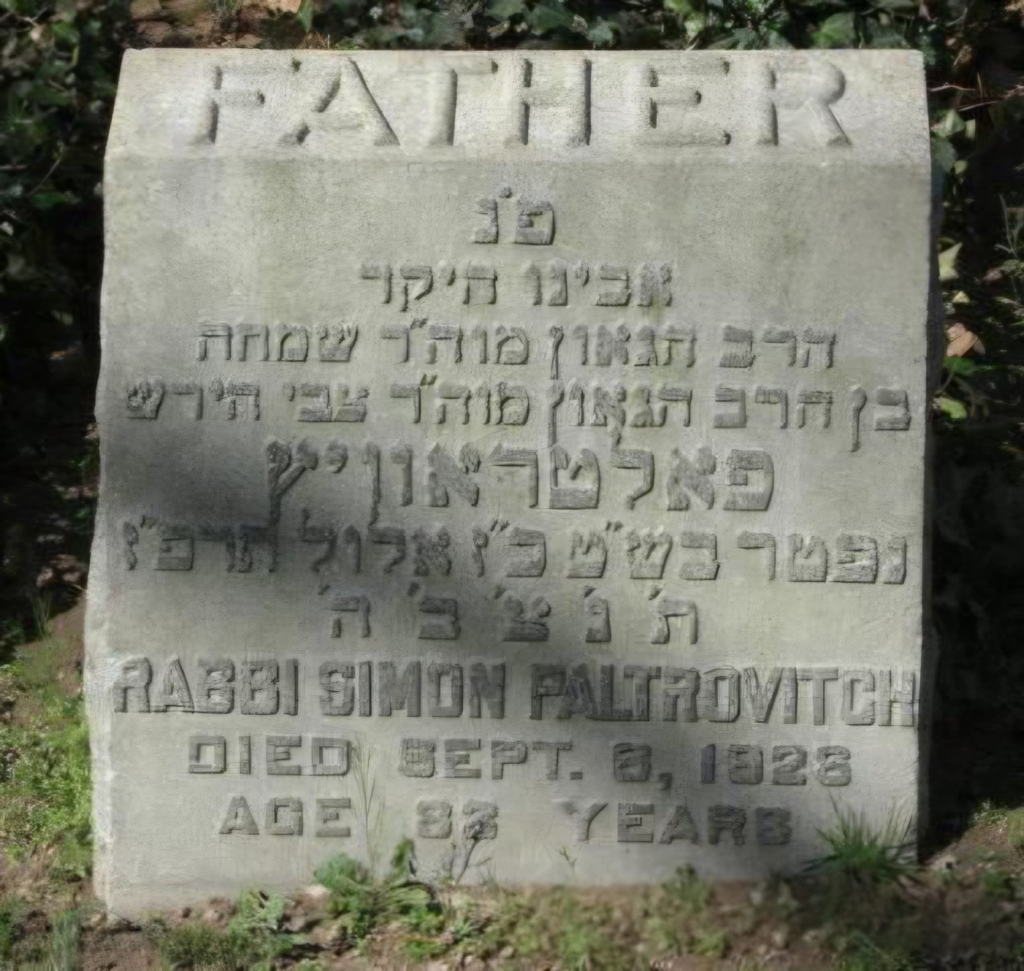
Rabbi Simcha Paltrovich passed away on Monday, 27 Elul 5686 — September 6, 1926, in New York. His obituary reports that he died at the home of his daughter, Mrs. Charles Rosen, and remembers him as a former chief rabbi of Buffalo.
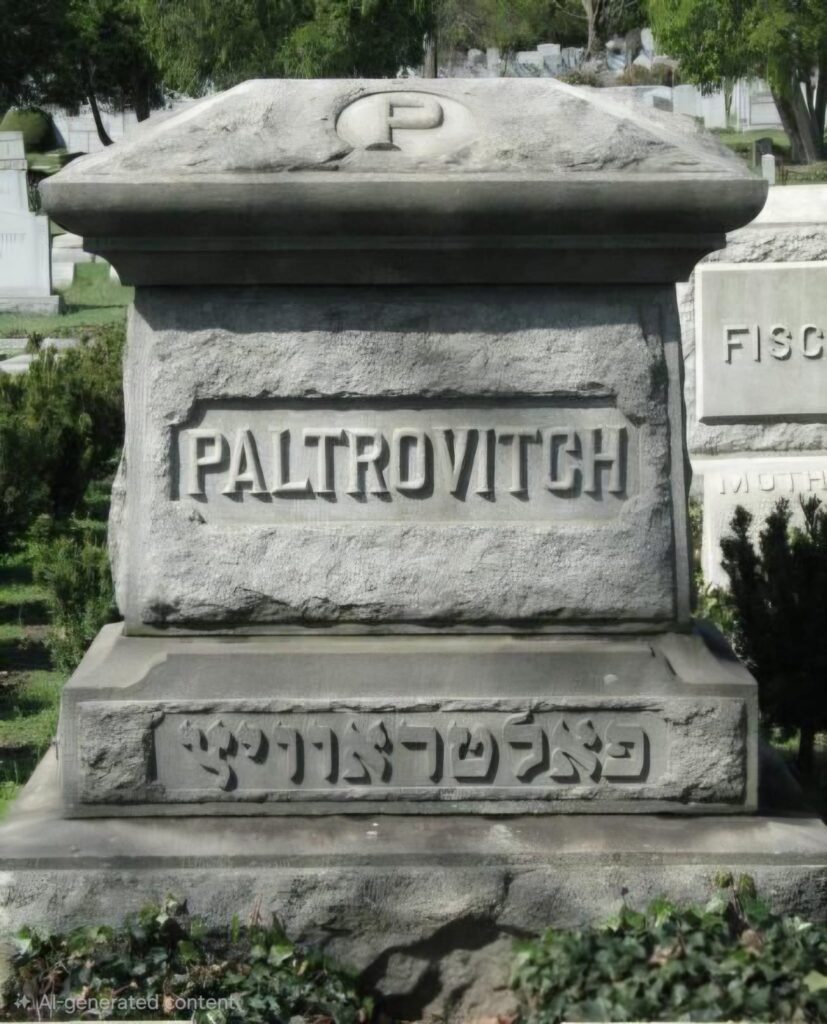
He is buried in Riverside Cemetery in Saddle Brook, New Jersey, in the grounds of Congregation Ohab Zedek. His matzeivah bears the English name Rabbi Simon Paltrovitch.
His seforim remain a lasting connection to his years of rabbinic service, preserving the Torah of a rav of Buffalo’s Congregation Bris Shalom.14
Sources, Footnotes & Links
- Łomża Scientific Society genealogical study, The Roots of American Actress Gwyneth Paltrow in Łomża Sources; HebrewBooks, author records; Kevarim.com, “Rabbi Simcha Paltrovitch.”
The genealogical study reproduces immigration and census records and a 1912 golden-wedding anniversary report stating that Rabbi Paltrovich had recently moved to New York after more than thirty-two years of service in Buffalo. These records support approximately 1880–1912 as an estimate for his broader Buffalo rabbinate; the precise dates of his tenure specifically at Congregation Bris Shalom remain unconfirmed. HebrewBooks catalogues his seforim, while Kevarim records his passing and burial. name.lomza.pl
Łomża research study — immigration, Buffalo years, and move to New York
HebrewBooks — Simchas Hegyon
HebrewBooks — Keser Tzvi
HebrewBooks — Kol Simcha
HebrewBooks — Simchas Avos
Kevarim — Rabbi Simcha Paltrovitch, passing and burial ↩︎ - Łomża Scientific Society genealogical study, marriage record and American census records; The New York Times, obituary, September 7, 1926.
His 1862 marriage record gives his age as twenty-two, while American census records suggest birth around 1842. His obituary gives his age at death as eighty-three. These discrepancies prevent assigning a definite birth year. name.lomza.pl
Łomża research study — marriage and census records
Find a Grave — Rabbi Simon Paltrovitch, including obituary transcription ↩︎ - Łomża Scientific Society genealogical study, passenger, naturalization, census, and anniversary records.
The precise date of his arrival in Buffalo remains unconfirmed. His obituary also records rabbinic service in Boston, Chicago, and Cleveland, without establishing the sequence or duration of those appointments. name.lomza.pl
Łomża research study — immigration and Buffalo chronology
Find a Grave — obituary and American rabbinic appointments ↩︎ - Jewish Buffalo History Center, “Brith Sholem.”
The congregation’s history identifies Rabbi Simon Paltrovich as its religious leader within its discussion of the period 1890–1914. That passage does not establish those years as the precise dates of his tenure. It also documents the congregation’s founding, its Pine Street address, and the origin of its familiar name. jewishbuffalohistory.org
Jewish Buffalo History Center — Congregation Bris Shalom ↩︎ - https://www.nli.org.il/en/newspapers/hebstd/1917/12/07/01/article/7/?srpos=118&e=——-en-20-hebstd-101–img-txIN%7CtxTI-buffalo————-1 ↩︎
- HebrewBooks, Simchas Hegyon, Parts I–III; Machon Halacha Brura virtual library; Otzar HaChochma catalogue.
HebrewBooks identifies the author as שמחה בן צבי פלטרוביץ. Machon Halacha Brura lists the first two parts as Buffalo publications from 5663 and describes their subjects. The Otzar HaChochma catalogue records the third part’s publication in Jerusalem in 5682. hebrewbooks.org
Machon Halacha Brura — commentaries on the Torah
Machon Halacha Brura — commentaries on Nach and the haftoros
Otzar HaChochma — catalogue ↩︎ - HebrewBooks, Kol Simcha; Winner’s Auctions, catalogue 114, lot 390.
The auction description identifies the author as Rabbi Simcha Paltrovich, Av Beis Din of Buffalo, and records the publication date, contents, and approbation. The described copy also includes a printed dedication with an addition in the author’s handwriting. hebrewbooks.org
HebrewBooks — Kol Simcha
Winner’s Auctions — Kol Simcha, Jerusalem, 1913 ↩︎ - National Library of Israel, Simchas Avos; HebrewBooks, catalogue record 2677.
The library record describes the work as a commentary on Maseches Avos incorporating Torah interpretations and Midrashic material. HebrewBooks identifies its author as Rabbi Simcha ben Tzvi Paltrovich. www.nli.org.il
National Library of Israel — Simchas Avos
HebrewBooks — Simchas Avos ↩︎ - Łomża Scientific Society genealogical team, The Roots of American Actress Gwyneth Paltrow in Łomża Sources, marriage, passenger, and family records, pp. 15–26.
The study reproduces the couple’s marriage documentation, passenger records, and Buffalo census entries, and provides a list of their children. Its family list should not be confused with a list of survivors at Rabbi Paltrovich’s passing, as some children predeceased him.
Łomża research study — marriage record, page 15
Łomża research study — children and family photograph, page 26 ↩︎ - “Hebrew Golden Wedding,” anniversary report reproduced in the Łomża genealogical study, p. 27.
The study places the celebration in 1912 and gives the couple’s residence as 210 West 143rd Street, with the celebration held at 103 East 116th Street. The account is valuable evidence for his move from Buffalo to New York. However, the study cites a family-history webpage without identifying the original newspaper issue, so its publication details remain unconfirmed.
Read the anniversary account — page 27 ↩︎ - The New York Times, death notices for Sophia Paltrovitch, reproduced in the Łomża genealogical study, p. 27; photograph of her matzeivah.
The sources disagree about her age: the reproduced newspaper notice gives seventy, the study’s narrative gives seventy-six, and her matzeivah gives seventy-eight. Her date of passing, January 31, 1920, is clearly recorded on the stone. A separate Rutgers Club notice asked members to attend the funeral of the mother of their colleague Harry Paltrowitz.
Death notices — transcription on page 27
Rebbetzin Sophia Paltrovitch’s matzeivah — photograph ↩︎ - Łomża genealogical study, p. 28; family genealogical entry for Regina Paltrovitch.
The study identifies Regina as Rabbi Paltrovich’s wife following Sophia’s death and reproduces their photograph. The heading “His Later Marriage” avoids assigning a marriage number: elsewhere, the study repeats an account of an earlier marriage before Tzipporah, which has not been independently verified.
Rabbi Paltrovich and Regina — photograph and accompanying text, page 28
Geni — Regina Paltrovitch ↩︎ - The New York Times, obituary of Rabbi Simon Paltrovitch, September 7, 1926; Rabbi Paltrovich’s matzeivah.
The obituary identifies his daughter’s home as the place of his passing. The study’s surrounding narrative mistakenly gives January 6, 1926, and an age of seventy-six. His matzeivah clearly records September 6, 1926, and an age of eighty-three, agreeing with the obituary’s stated age.
Find a Grave — obituary transcription
Rabbi Paltrovich’s matzeivah — date and age at passing ↩︎ - Kevarim.com, “Rabbi Simcha Paltrovitch”; The New York Times, obituary, September 7, 1926.
Kevarim records the Hebrew and civil dates of his passing and identifies his burial at Riverside Cemetery. It lists the location as Block A, Section 2, Plot 60, Grave 7, in the First Hungarian Congregation Oheb Zedek section. The cemetery can confirm the precise location under the name Simon Paltrovitch. kevarim.com
Kevarim — Rabbi Simcha Paltrovitch, burial information and photographs
Find a Grave — Rabbi Simon Paltrovitch and obituary transcription ↩︎